
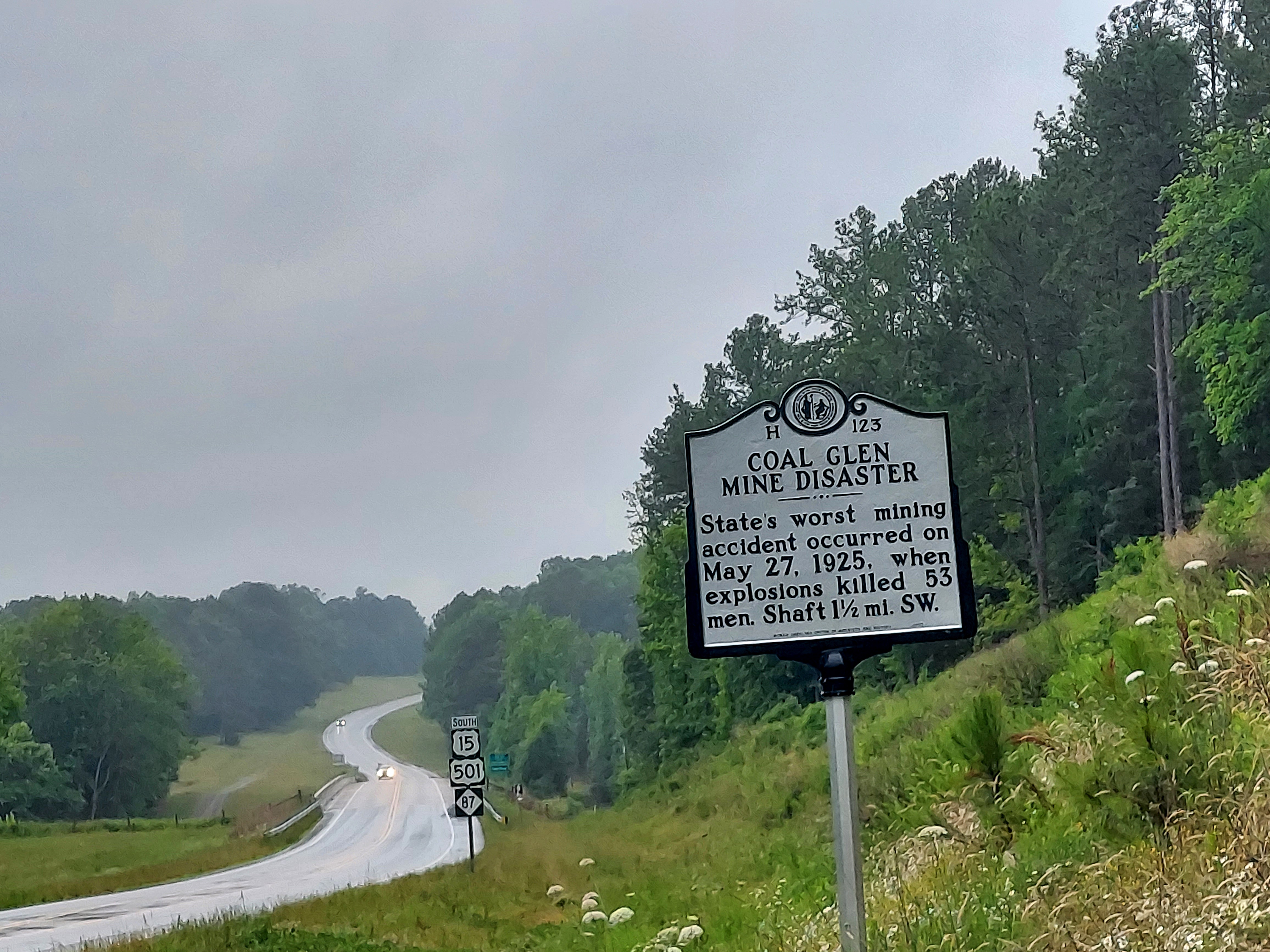
At 9:40 am, May 27, 1925, there was an explosion inside the Carolina Coal Mine, Farmville, Chatham County, North Carolina; as a result, 53 men lost their lives. This remains the deadliest industrial disaster in North Carolina history, but it is unknown to many in the state, but for a historical marker along US 15-501 near the Deep River.
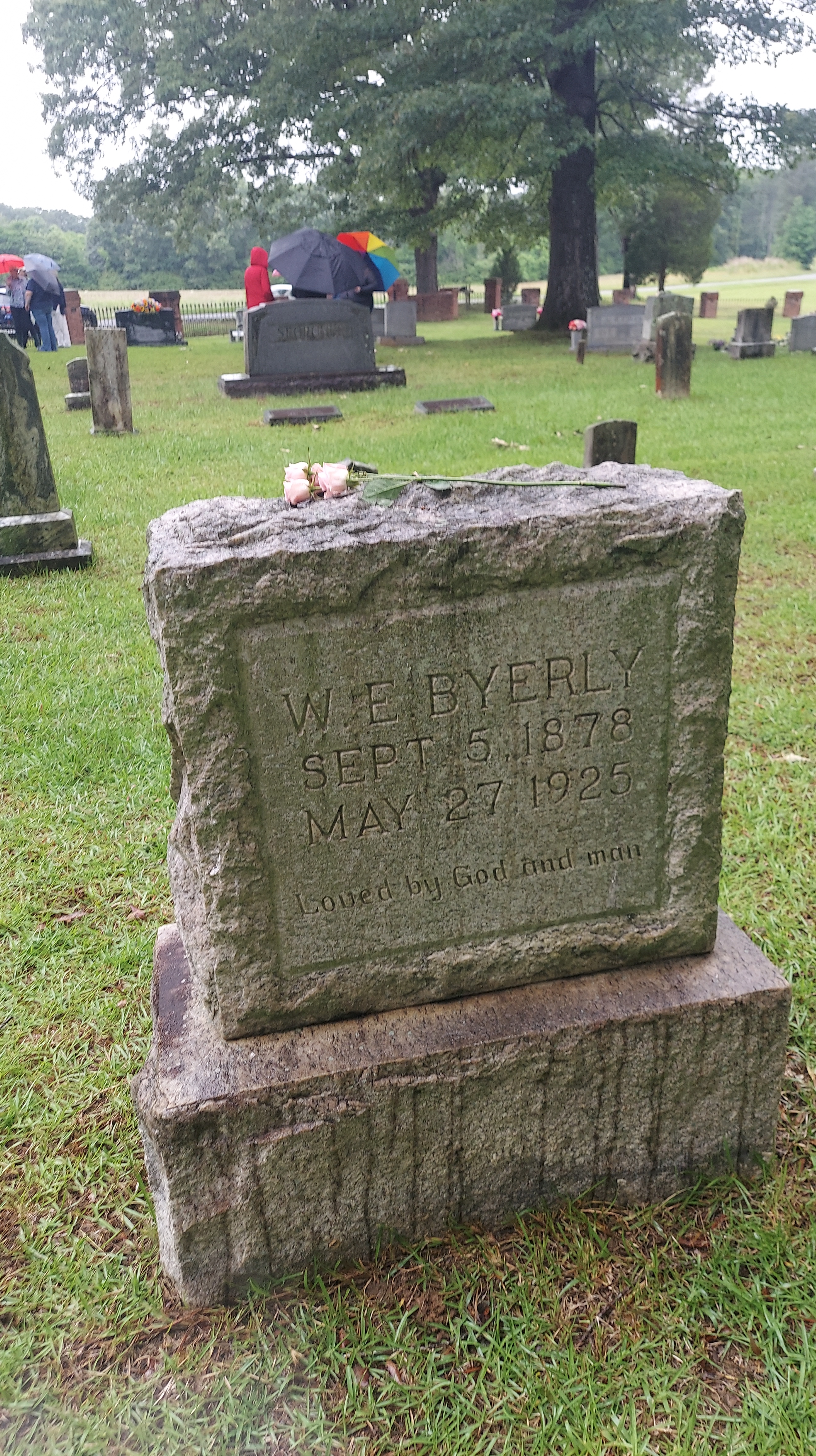
On the 100-year mark of the disaster, a group of 10-15 folks, mostly locals, gather at the Farmville Cemetery for a memorial organized by the Heart of Deep River Historical Society. It is rainy and unusually cool weather.
In March, while exploring the Deep River Triassic Basin, I met one of the organizers, Debbie Hall, at the Cumnock Bridge about a mile from here. She invited me to this event; I feel it is important to attend. Since last year, I have learned a lot about the Basin and its geology, and the industries it has supported. The Heart of Deep River Historical Society is doing a lot for education and preservation around this area, while also trying to find a steady meeting place.
Debbie, Alysse, and other society members read the names of the miners who passed away in the 1925 Coal Glen explosion, but also names of those lives lost in the other local mining disasters (such as May 20, 1900 and December 19, 1895 in the Egypt mine). Five miners from Coal Glen were buried at this cemetery, and the Society has placed flowers at each of their headstones. Their names are Henry Hall, Claude Johnson, Charlie Wood, W.E. Byerly, and W. Hollis Richardson.

In the post from March, I wrote about the Deep River Basin’s geology (with maps) and its coal mining history going back to the 1840s. Mines were on each side of the river near the towns of Cumnock (formerly Egypt) and Farmville, west of the bigger railroad town of Sanford.

After the event concludes, I am told I can go see the Coal Glen mine entrance. It’s very close to the cemetery, on the property of General Timber, a working sawmill, and it wasn’t open or accessible at the time of my visit in March. It’s a heavy feeling to stand at the spot of the tragedy today, as trucks haul wood around me, across the muddy yard, as if it’s a typical workday.
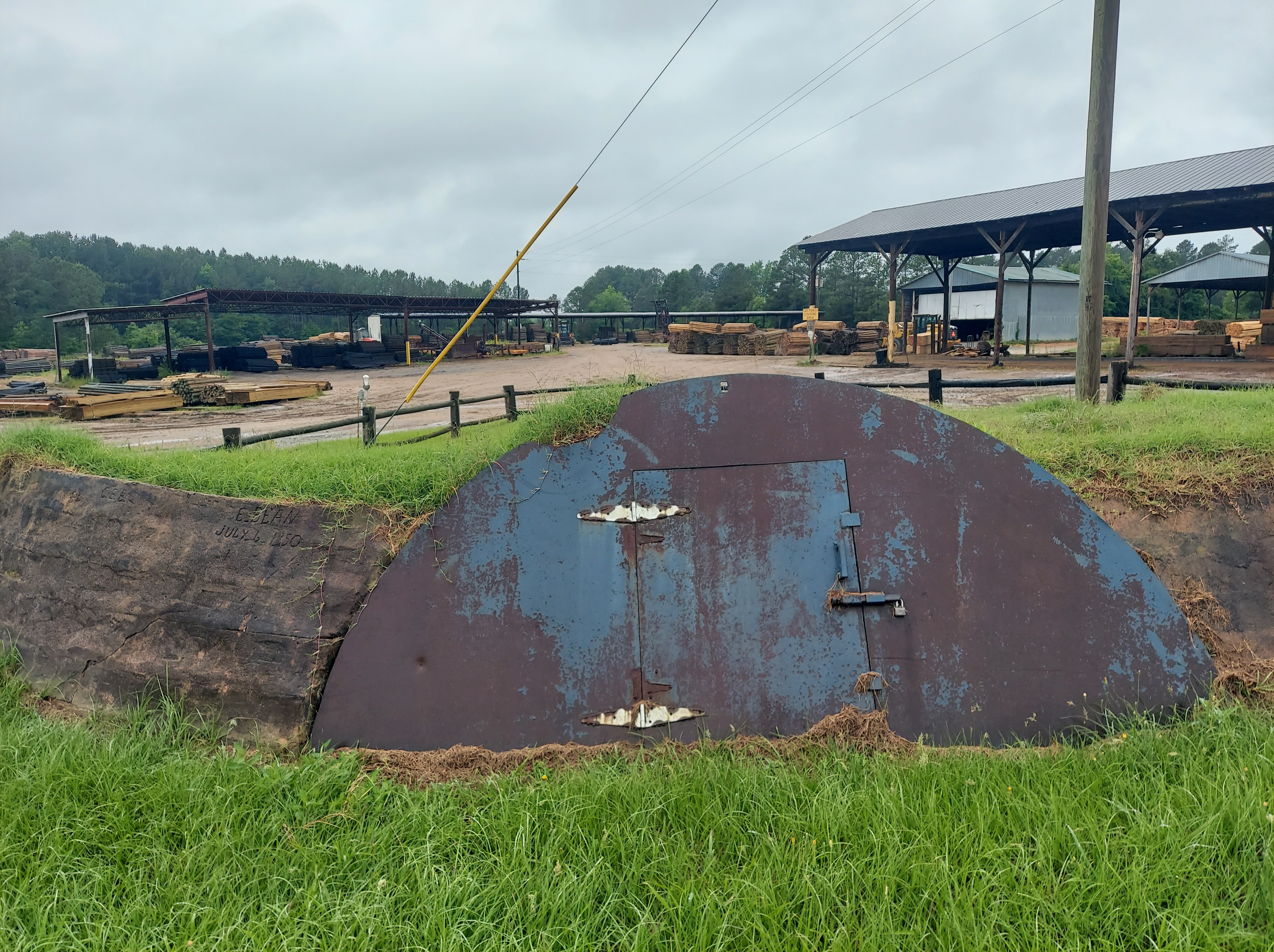
An owner of General Timber gives me a flyer about the 1925 disaster and answers some helpful questions that I have. She says the sawmill uses the water pump from the mine, so they covered the entrance with a locking metal door. To the left of the door, I notice a name & date carved in the stone: “E. BEAN JULY 6, 1850.”
The Assembly has a detailed article about Coal Glen, published this past Monday (Memorial Day), with a historic photo of the mine entrance and an interview with Debbie Hall. In the article I read that Henry Hall, one of the miners who lost his life in the mine explosion, was Debbie’s great uncle.

The Raleigh News and Observer and the Durham Morning Herald published stories May 28, 1925, reporting the news about the disaster.
“Twelve hundred feet from the mouth of the slanting shaft into the mine a handful of relief men worked feverishly with a mountain of crumbled slate and timber. Beyond the wall of debris [a] fire rages, and the thousands who wait silently about the mouth of the shaft wonder what else goes on beneath the quiet earth beneath their feet.”
– Ben Dixon MacNeill for the News and Observer, May 28, 1925
I imagine standing here one hundred years ago, observing the tragic scene, wondering what stories the “quiet earth beneath” could tell. Another section of the mine flooded; inaccessible tunnels surely still lie below. Could there any unstable spots in this area, where the soft, sedimentary surface might dip to one of these tunnels?

In Centralia, Pennsylvania, the coal beds underground have been burning since the 1960s, causing the town to be vacated. If a fire were to spread here, could it come in contact with the coal seam (if any amount remains)? (The Centralia coal is anthracite and close to the surface; bituminous coal was mined here, on a much smaller seam. But it’s still something to consider.)
In September of 2024, I toured the Pocahontas coal mine and the town cemetery, and I haven’t written about that yet on this blog. That visit happened a few days before Storm Helene ripped through. I was planning to travel back to West Virginia and the New River Gorge, but that may not happen this year. Having now been to the Coal Glen site, the story of Pocahontas coal will happen soon.
As always, thank you all for your support and enjoyment of this project.
As above, so below.
-Arianna

 arianna's creative travels