March, April, and May 2025
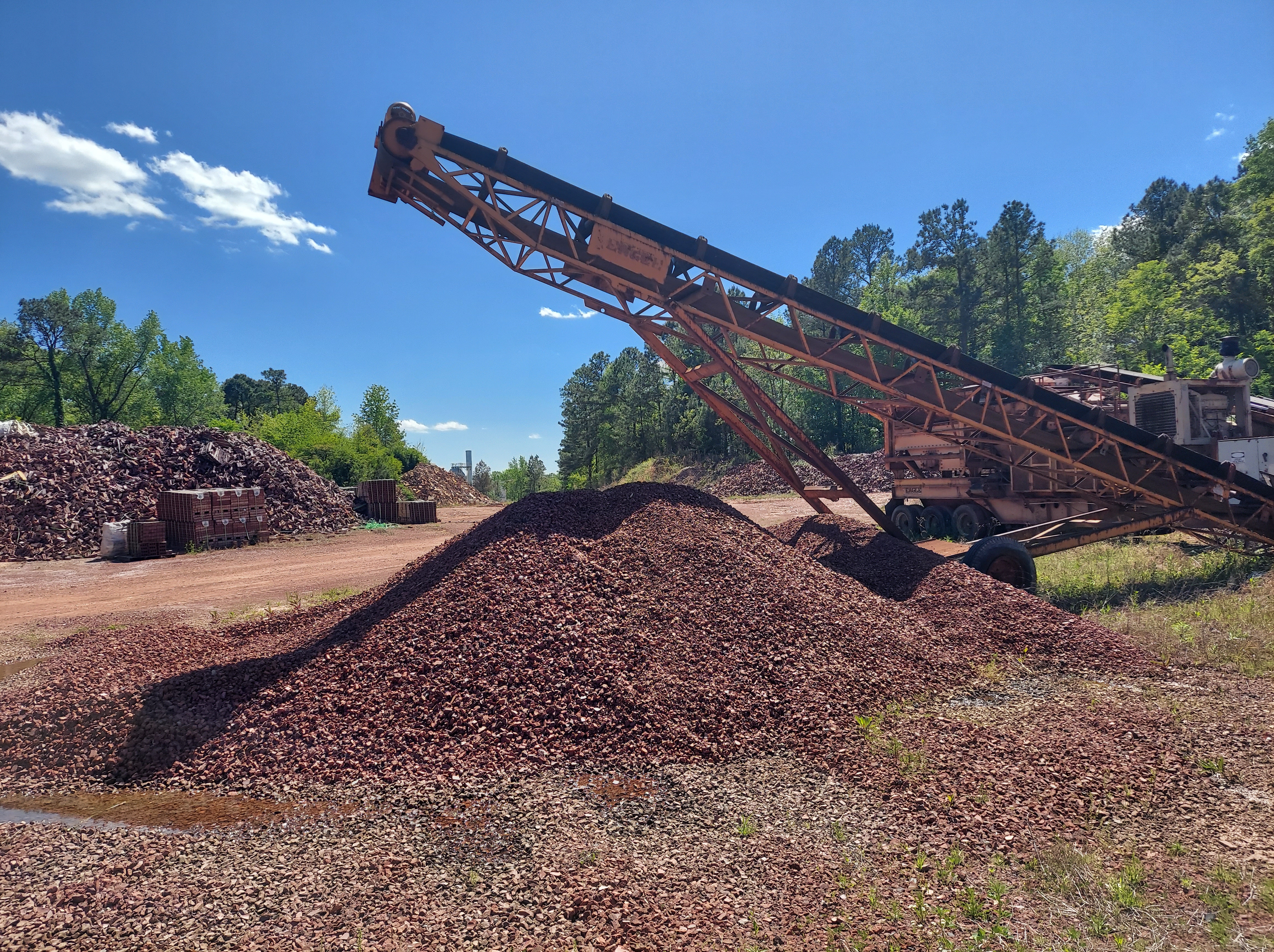
While walking in a brick plant, on pressed red earth near Moncure, NC, I step over small rectangular pieces of brick, lying across the lot. The size, flat surface, color palette and softness of this material, I felt, would be perfect for rune casting stones, and this source in the Deep River Triassic Basin holds a new, personal connection. So I ask the workman if I could take some, and he says yes. Between this and my return visit a few weeks later, I leave with a bagful of red and brown brick chips.

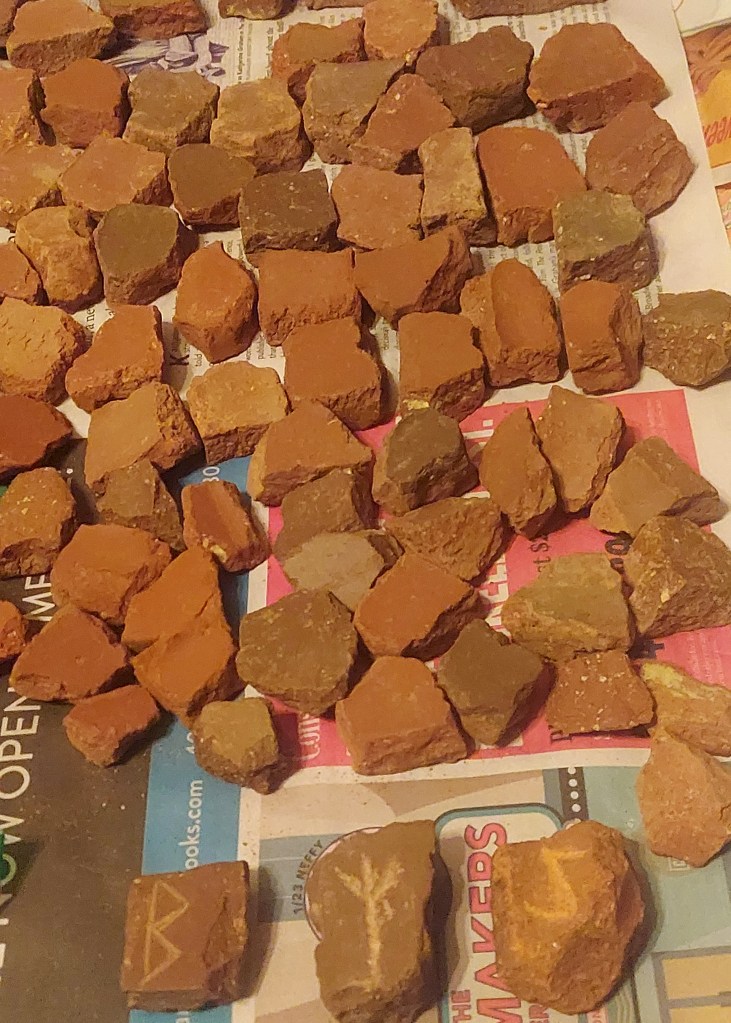
Using an engraving tool, I carve each runic character into a brick chip. This gives the rune bricks a rustic, antique look and feel. Then, I darken the engravings with incense ash and brush the engraved surface with a clear “Gourdmaster” finish. With 24 smaller chips, I make a second set, engraving but not darkening with the ash. I may finish these later, but they look and feel ready now.

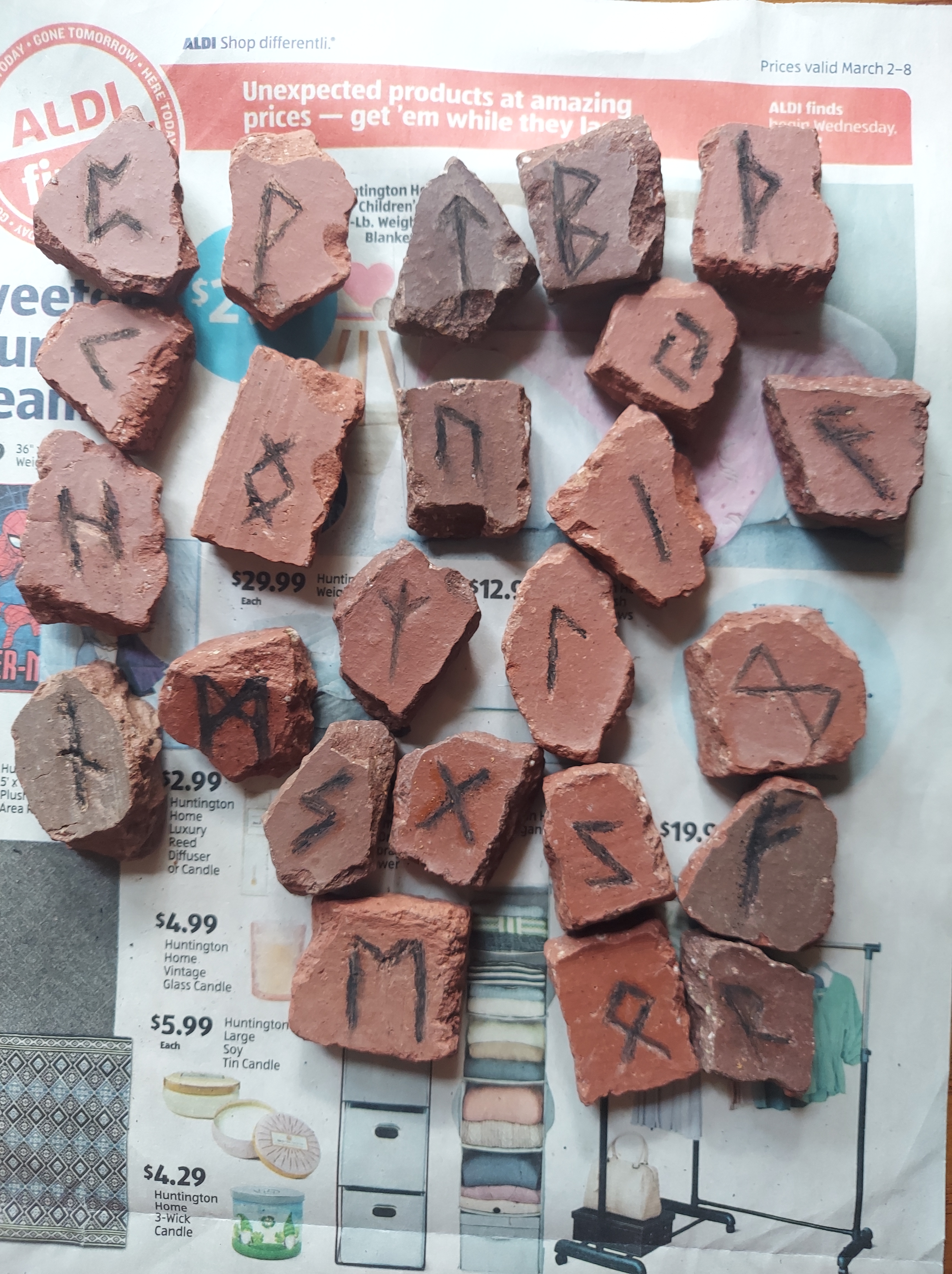

The 24 runes in both of these sets are in the Elder Futhark*, which was used between ~150 and ~700 c.e. in northern Europe, and it’s the one more recognizable in the modern era. But as language evolved going into the Viking Age (700s-1000s c.e.), a different runic script emerged, referred to as the Younger Futhark**.
The Scandinavian Younger Futhark has 16 runes and was used for writing in Old Norse language. I learn this in a class taught by Smeðis at the recent TVE Academy in Drekheim village.
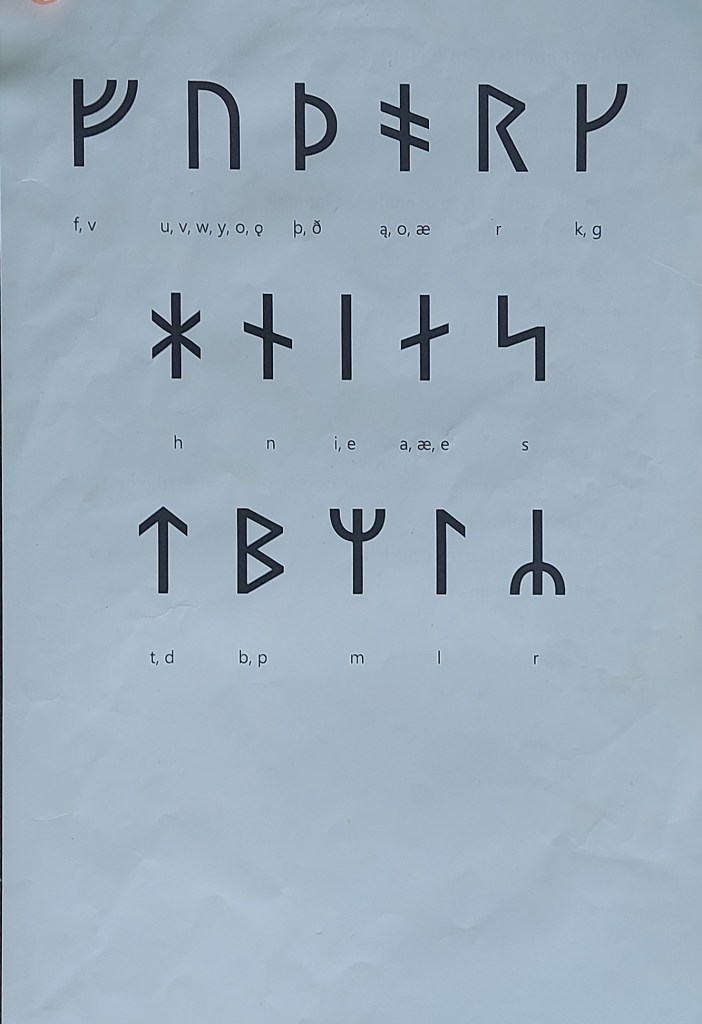
*”Futhark” refers to the rune sequence of 3 rows, where the first row begins with characters that make the word “futhark” (compare “alphabet”). The characters developed into this sequence over time; there is a stone in Sweden with this sequence inscribed that has been dated to about 400 c.e.
**The Younger Futhark, shown above, was used in Scandinavia; in Anglo-Saxon lands the runic “futhorc” script contained 33 characters and was used with Old English. More detailed information about these early languages and writing systems can be found in these links.
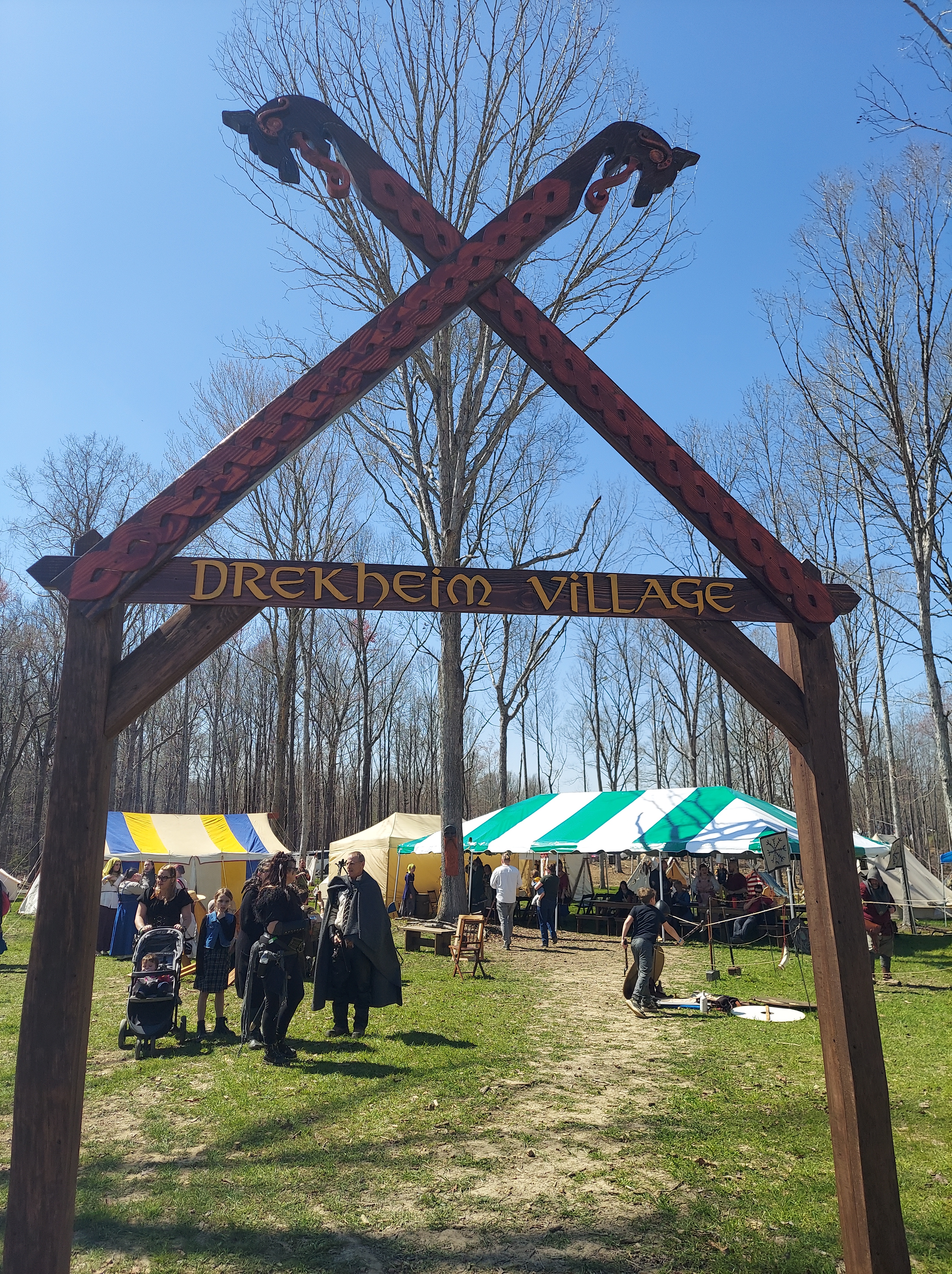
The village of Drekheim lies amid wooded, rolling hills not so far from Albý. They host a fair in early spring, and it becomes a busy trade town, like a smaller Heðebýr.
I first learned of the spring fair from Lykania as a good place for trading, but since visiting the community and becoming involved, I found it’s a good place for learning, too.
–Arjadne Alfstendóttir
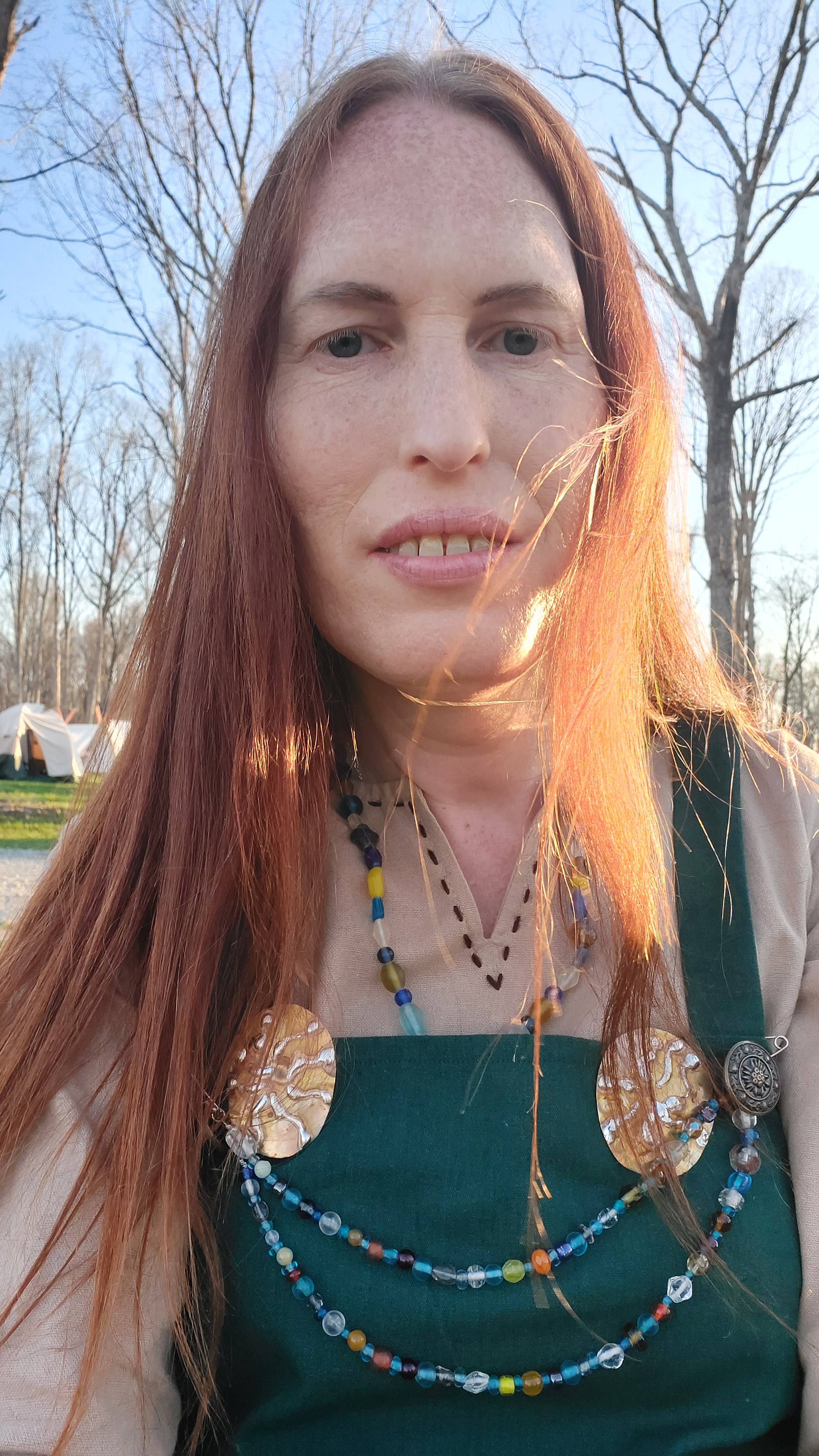
TVE festival is in March, and the “academy” is in May. I attended the festival in 2024 and 2025, then the academy event this month. They will host a Yule gathering this December. If you like Renaissance fairs or historical reenactment and you’re in NC or Virginia, I recommend these events. For more information, visit https://www.thevikingexperiencenc.com/
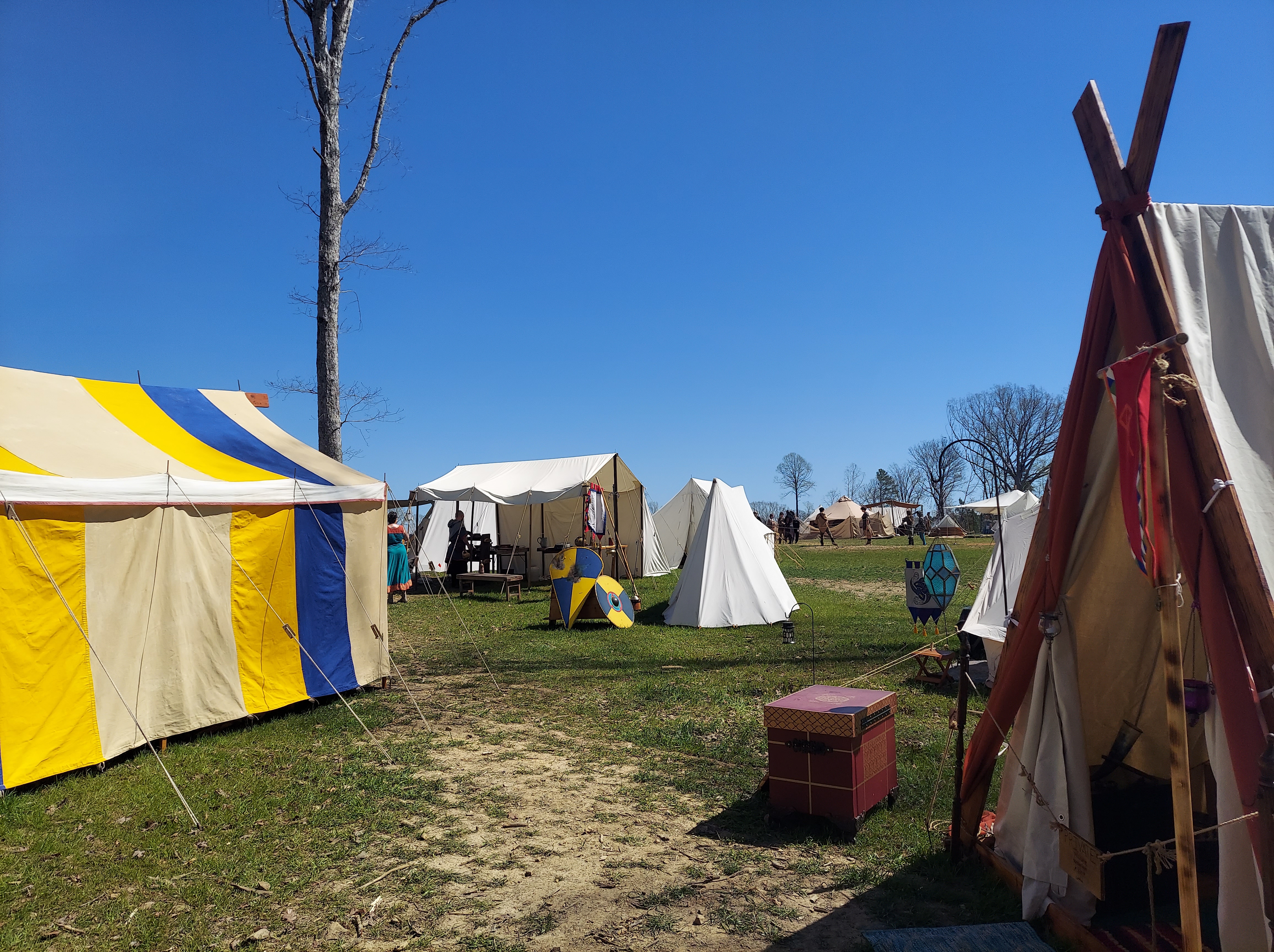


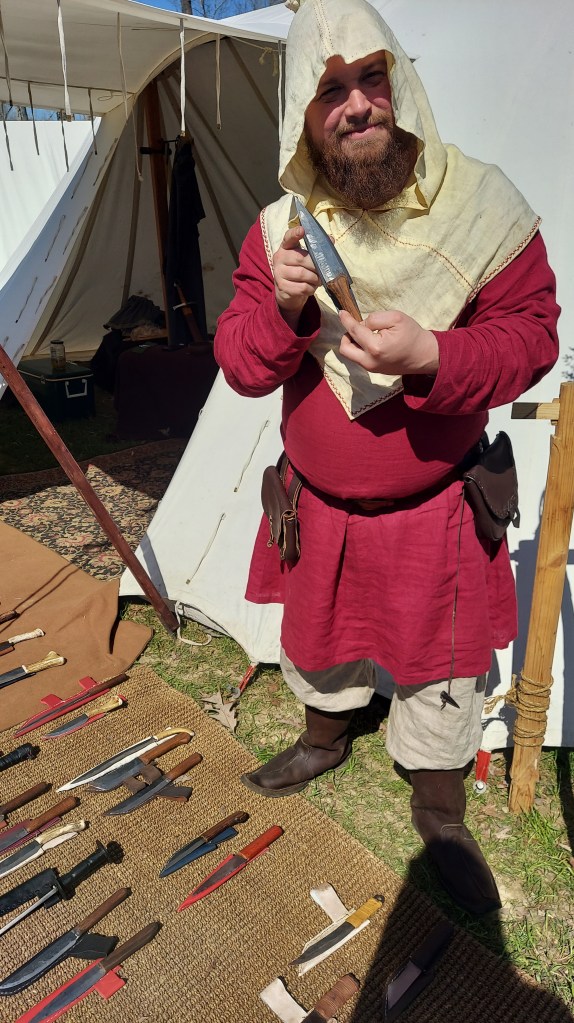

At the festival, the familiar music of Heilung and Wardruna play in the background as mead flows freely around a cauldron cooking stew over a well-managed fire. Cabbage is an ingredient in the stew at some point. Chicken and fish are also cooked. There are also “cooking like a Viking” demonstrations held at the festival and during the academy. A live-music set is performed by Skogarmaor after-hours at the stage during the festival the weekend my girlfriend and I attend.
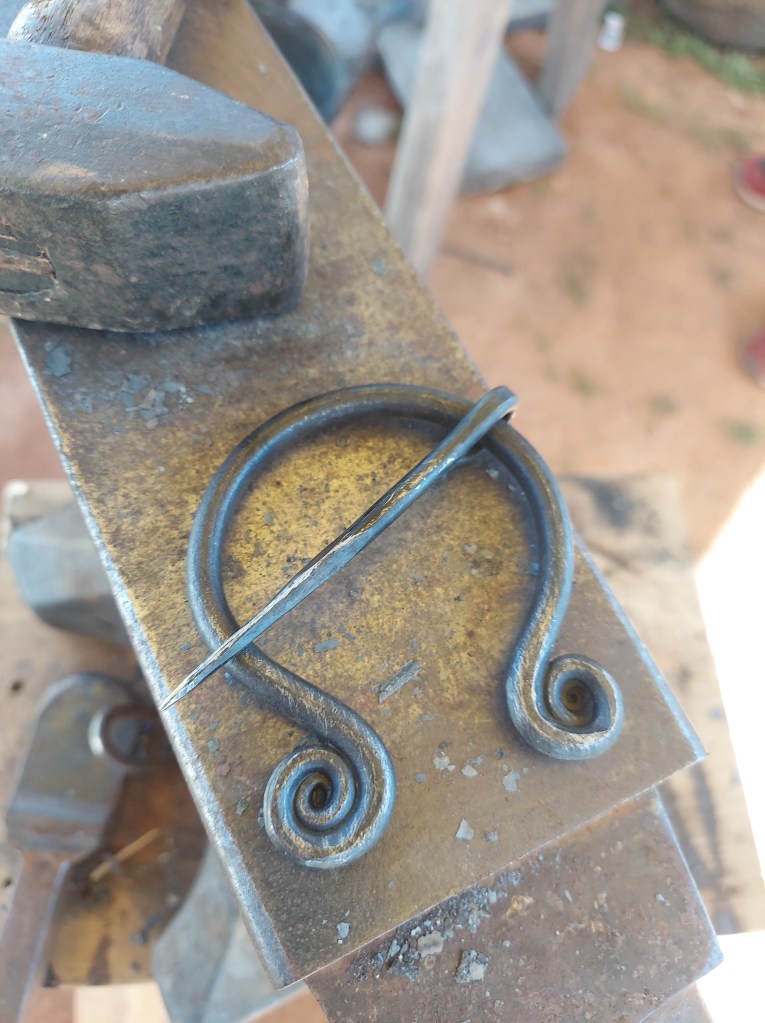
Blacksmiths are plentiful here, and they all do great work. I love the double-edged knife/dagger with a wood handle that I got from Justin as a trade with jewelry.
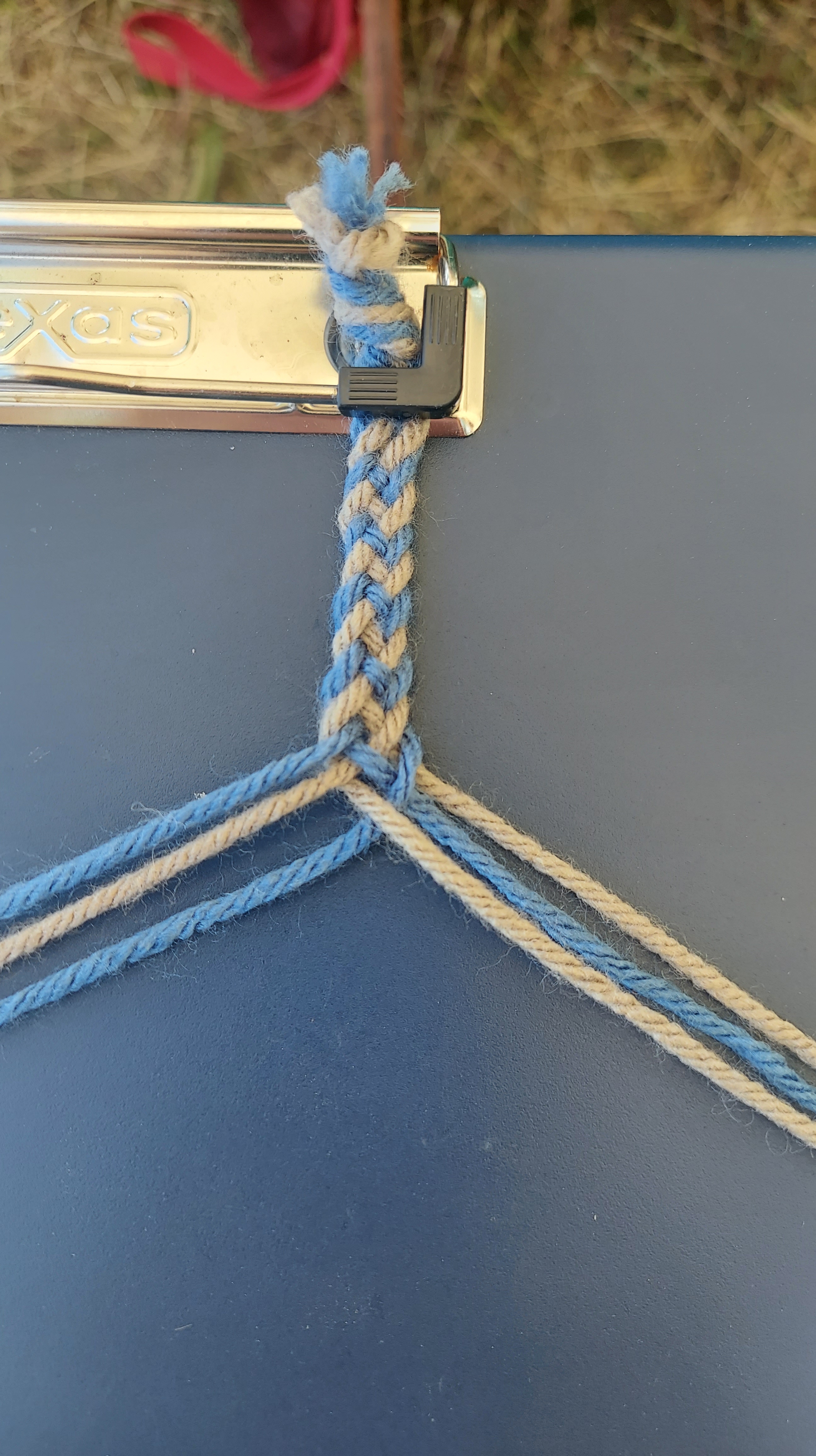
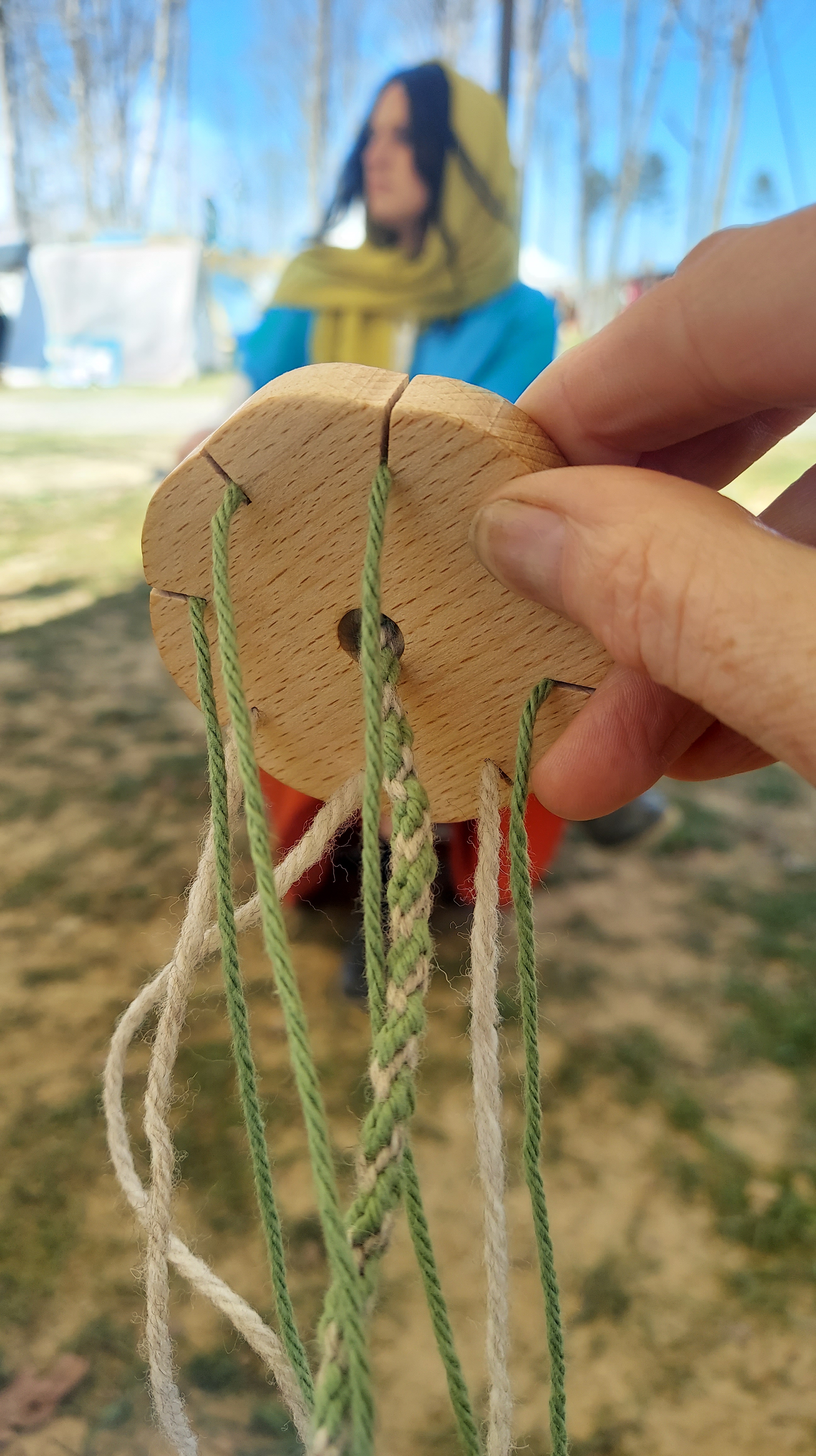
The weaving tent is “where you hear the good gossip.” My girlfriend and I spend time here learning patterns at the festival (and I again at the academy), and we do hear some stories.
At the smaller May academy, “Liv the Mender” teaches a class for making a Viking-era tunic or dress, which I find very helpful. In addition to the class on runes, Smeðis also teaches about Birka, the trading town in Sweden; there are classes for dyeing fabric, making frame drums, Norse mythology, and making glass beads. It’s not possible to take them all, but I much enjoyed all of the classes I took.
Central to Drekheim is Clan Red Dreki, led by Queen Hanna the Red (one of the TVE owners with her mother, Angela). They organize the events on their land (near modern-day Oxford, NC). While “Dreki” correctly refers to a dragon, I overhear a festival attendee say “drek” means “dirt” in German so ‘the village’s name fits.’ I like that comment, since the dirt here is a mix of tan and red, and its exposure frames the festival grounds, making me think of the red clay that composes my eventual set of brick runes.
I appreciate the community-oriented feel of TVE and its events! It’s significant that they are inclusive of all people, including LGBTQ and different ethnicities, and they do not support racist or white-supremacist attitudes or behavior.

Lykania I have to thank for showing me this path to Drekheim and of Viking jewelry and craft. She is a master of this trade, with glass as her primary medium. She has traveled to Iceland, Greece and Italy, and taught a class at an event in Jorvik (York), England. Her website and blog are here: https://lykania.com/
Skogarmaor (performed live at TVE festival) https://youtu.be/crF1n1tfJfo?si=Uq0cj35U-NHmtOuj
Heilung “Traust” (played on a modern device at the festival) https://youtu.be/viqXlfkbWmQ?si=fyDexo0uFw5EJMlG
Let me know your favorite historical reenactment groups and events in your areas. I would be interested in going to other events since I have an appropriate wardrobe.
Next week I plan to return to the Triassic Basin for one or two more events – mining and lake-oriented – if weather permits.
Thanks again for reading and enjoying my writing!
Arianna

 arianna's creative travels