PANGAEA is splitting slowly but not neatly. Forces pull apart land masses, and the water flows into the open space of the rift. The largest spaces eventually become part of the Atlantic. Smaller spaces become long, shallow lakes, swamps, and other wetlands, giving a habitat to large and small reptiles, insects, palm trees, and other plants.
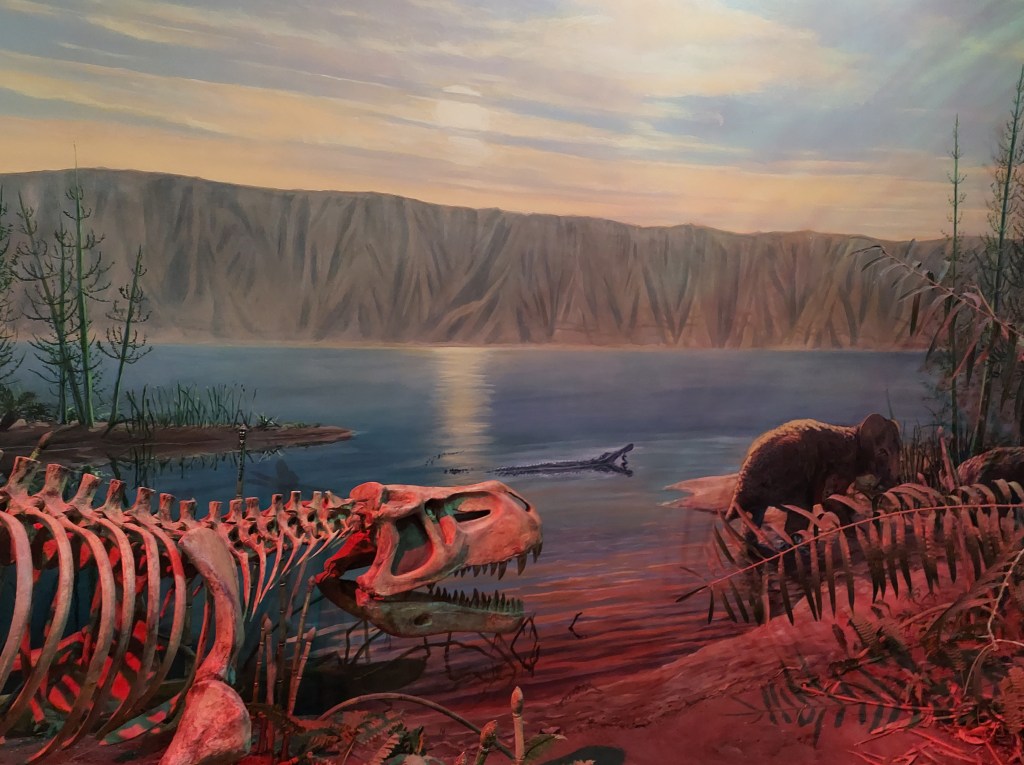
Æons later, these basins have partially filled with sand and mud; the hills around them have eroded, and the climate cooled. They now lie inland within the Piedmont, separated from the ocean.
IN A SWAMPY PINE FOREST between three universities and their cities, “tech ecosystem” Research Triangle Park was established in 1959 in North Carolina. It was envisioned as a habitat for business and collaborative research, and to help redevelop the area’s economy following World War 2. Giants like IBM, RTI, and Burroughs-Wellcome set up corporate campuses here in the following years, using the natural landscape to their advantage.
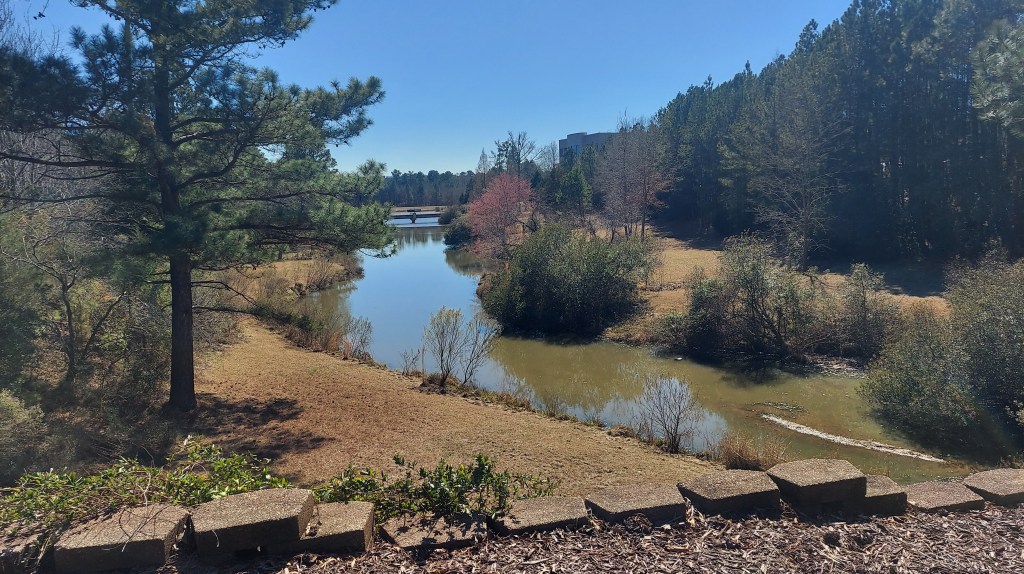
Geologically, this swampy pine forest is in the Durham sub-basin of the Deep River Triassic Basin. RTP, RDU airport, and the town of Morrisville are on the eastern edge of this sub-basin; Durham is on the north. The larger rift basin stretches southwest ward across the state, a sedimentary strip 150 miles in length and 15 miles wide in parts. The other Triassic Basin in NC – the Dan River – is narrower and further inland toward the mountains; I have explored and written about that back in 2024.
Growing up in the Triangle, I crossed this basin many times, unaware of this geology, but I knew about the “swamp” between Raleigh and Chapel Hill…and the “red clay” visible in the earth across the Piedmont.
WHO THREW THE FIRST BRICK?
Enslaved brickmakers at Stagville…or archosaurs 220 million years ago?
Brick construction in NC goes back to at least 1730, when Abraham Sanders used local sedimentary rock to build his house in Hertford (aka the Newbold-White house). In the clay-rich Piedmont Triassic basin, Richard B. Fitzgerald operated a brick yard in Durham beginning in the 1870s, which supplied material to build the new city’s tobacco factories and warehouses. Around the same time in Sanford to the south, red sandstone called “brownstone” was mined from quarries and figures heavily in that town’s history: Brick capital of the US.
“The final color of a brick depends on three things: the natural chemical composition of the clay or shale, the firing temperature, and the method of firing. Every clay deposit is created by specific geological circumstances, therefore, even deposits in close proximity to each other may produce notably different colors of brick.… The Piedmont Plateau of the eastern United States contains a large amount of clay soils (Ultisols) with a particularly high iron oxide content, resulting in red brick when fired between 900 and 1000 degrees Celsius. Raising that temperature produces a plum or purple brick, higher again, a brown or grey. The lower the iron content, the whiter the brick…”
–Broeksmit and Sullivan, 46; Henry, 406; quoted in The Art of Brick: Brickmaking In Piedmont North Carolina, by Martha L. Canipe (2022) handmadebrick.com/blog
The brick industry continued to expand with increased demand; its durability and the availability of source material made it ubiquitous for government buildings and commercial districts across the southeast. At NC State University, I spent 4 years walking across brick plazas to attend classes in brick buildings of various architectural styles.
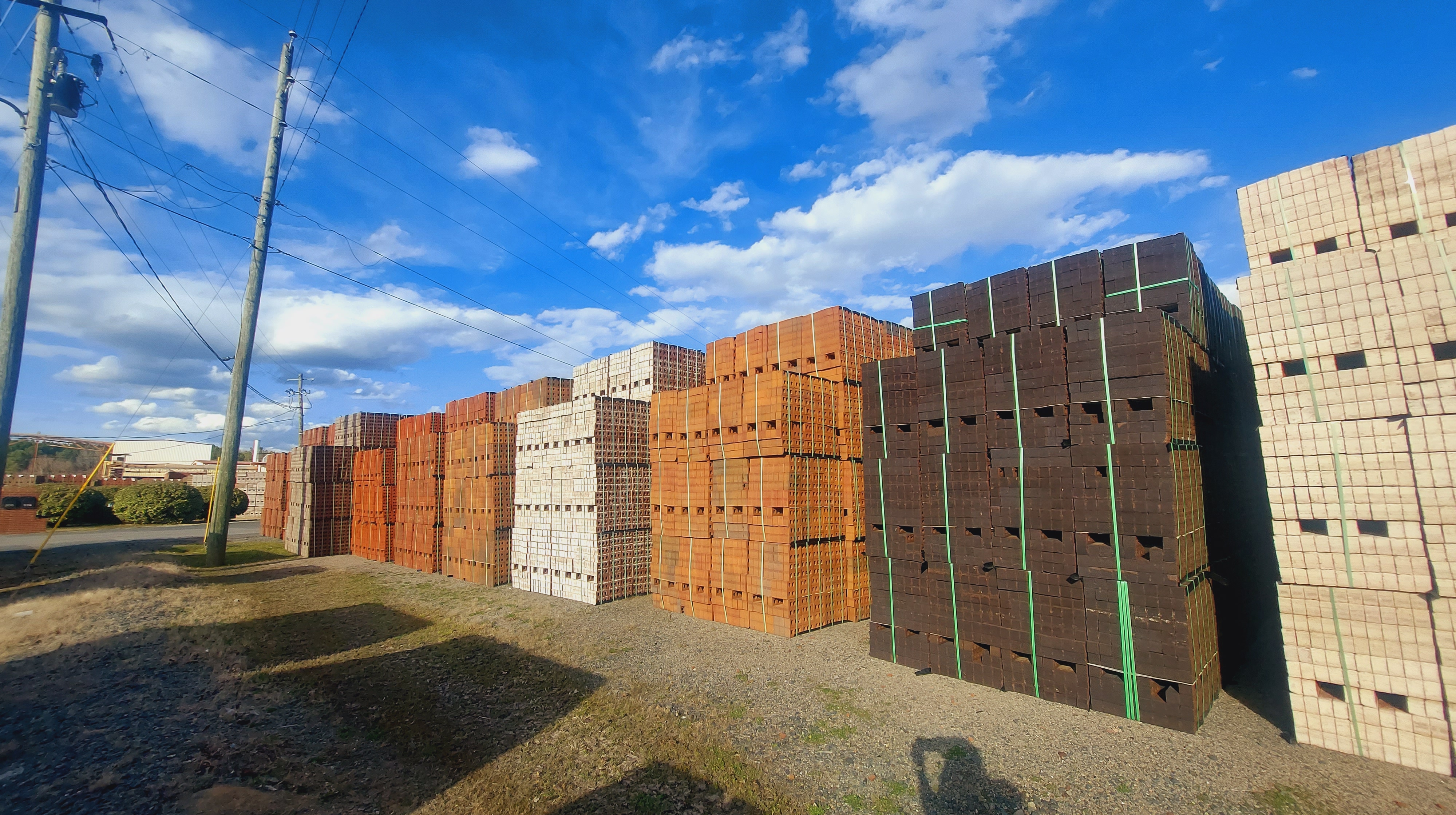
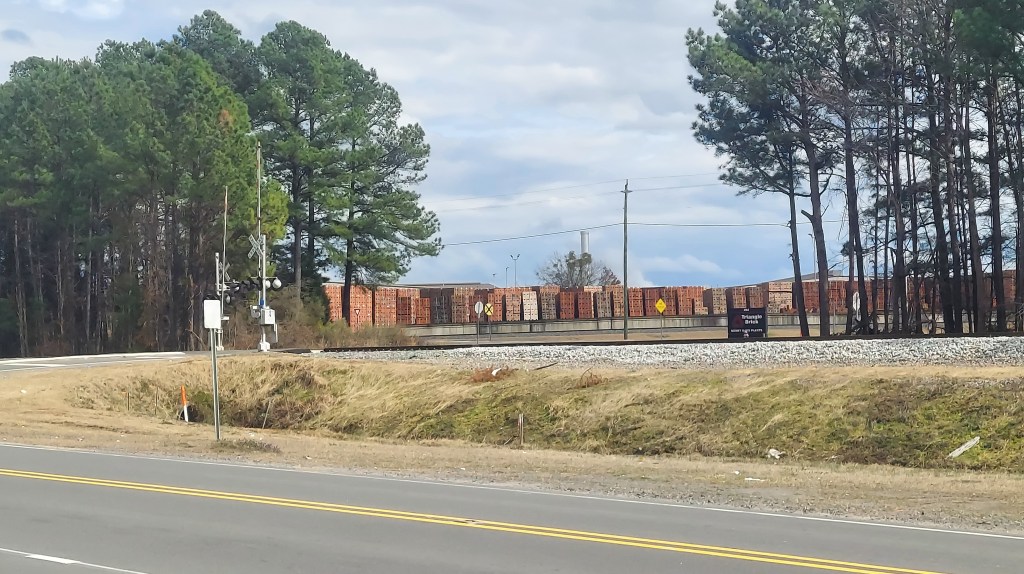
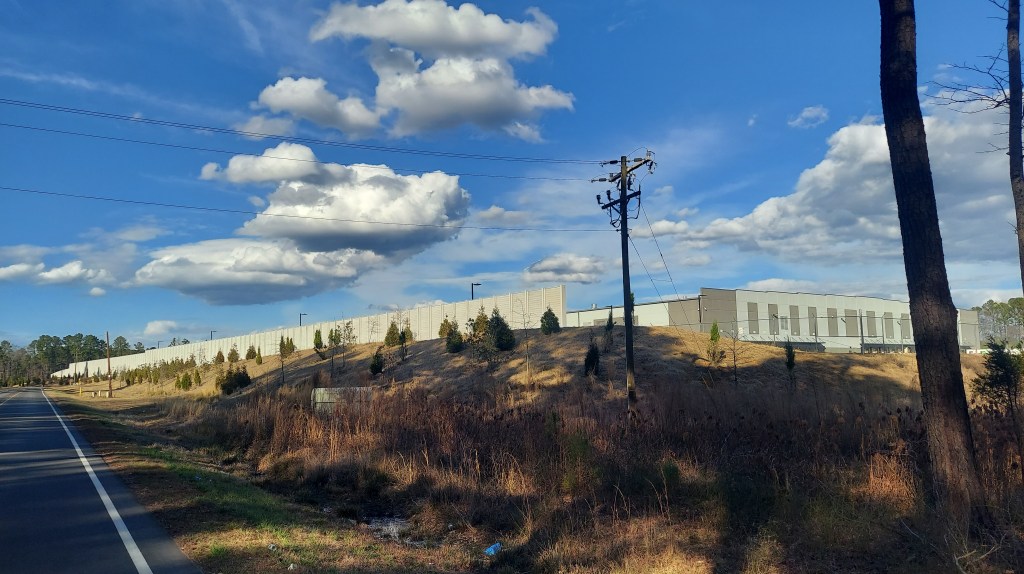
Near the basin town of Moncure, about midway between Raleigh and Sanford, Triangle Brick Merry Oaks Plant and General Shale Moncure Block Division mine iron-rich clay and shale, process it inside sprawling, white factories; then stack the bricks into these striking city-like rows.
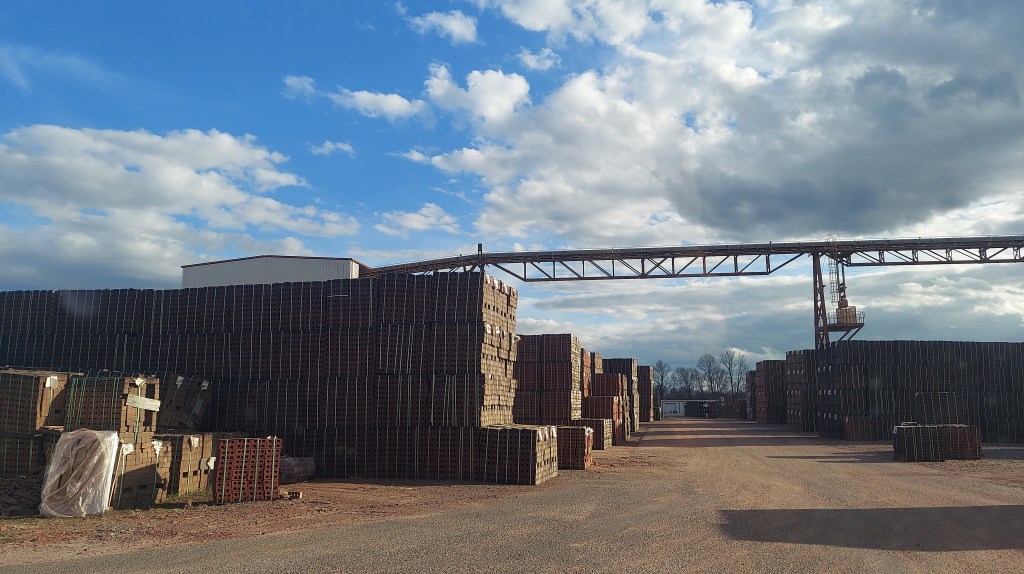


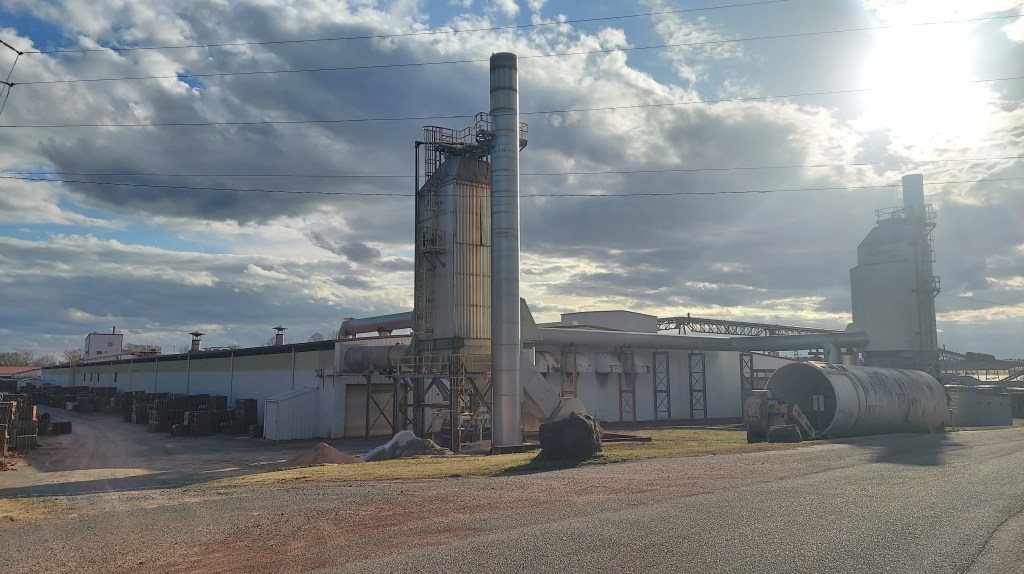


Triangle Brick began in 1959 in Durham, adjacent to Research Triangle Park; this was the same year RTP was established. Their offices remain there, while the bricks are made in Moncure.
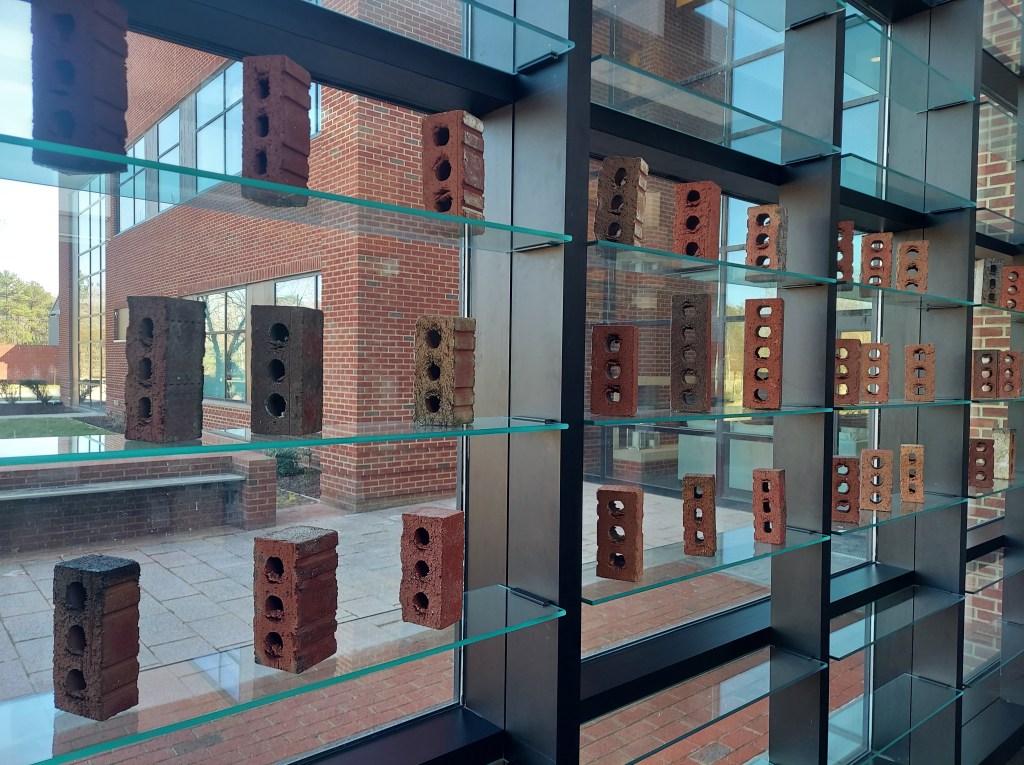

I’ve learned that fossils of a rauisuchian reptile from the Triassic, an animal with characteristics between crocodilians and dinosaurs, have been found here. Access to the mine is restricted, though there is a small exhibit at the NC Museum of Natural Sciences, which I visited last year (with bones on display). It would be good to talk with someone knowledgeable here.
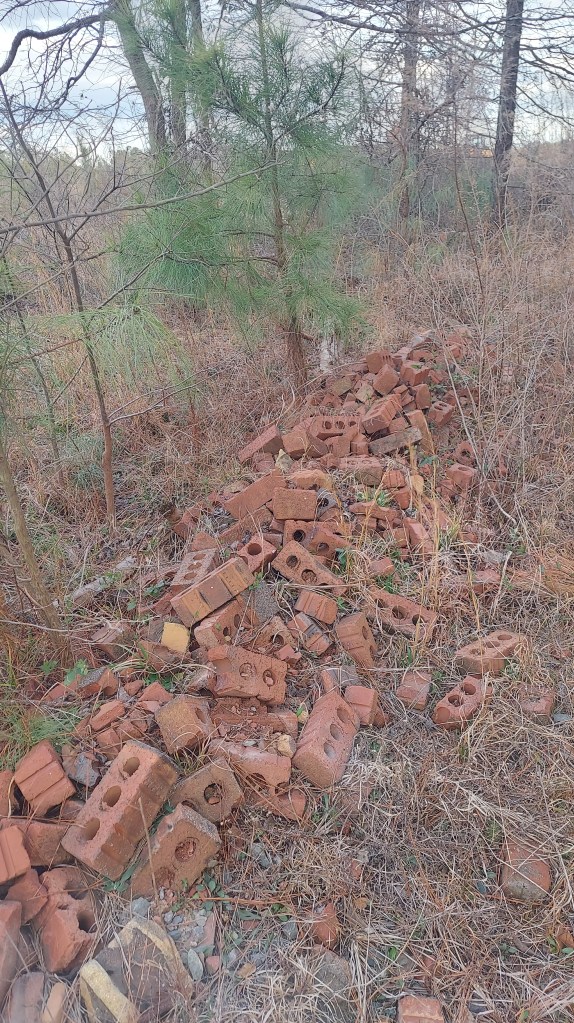
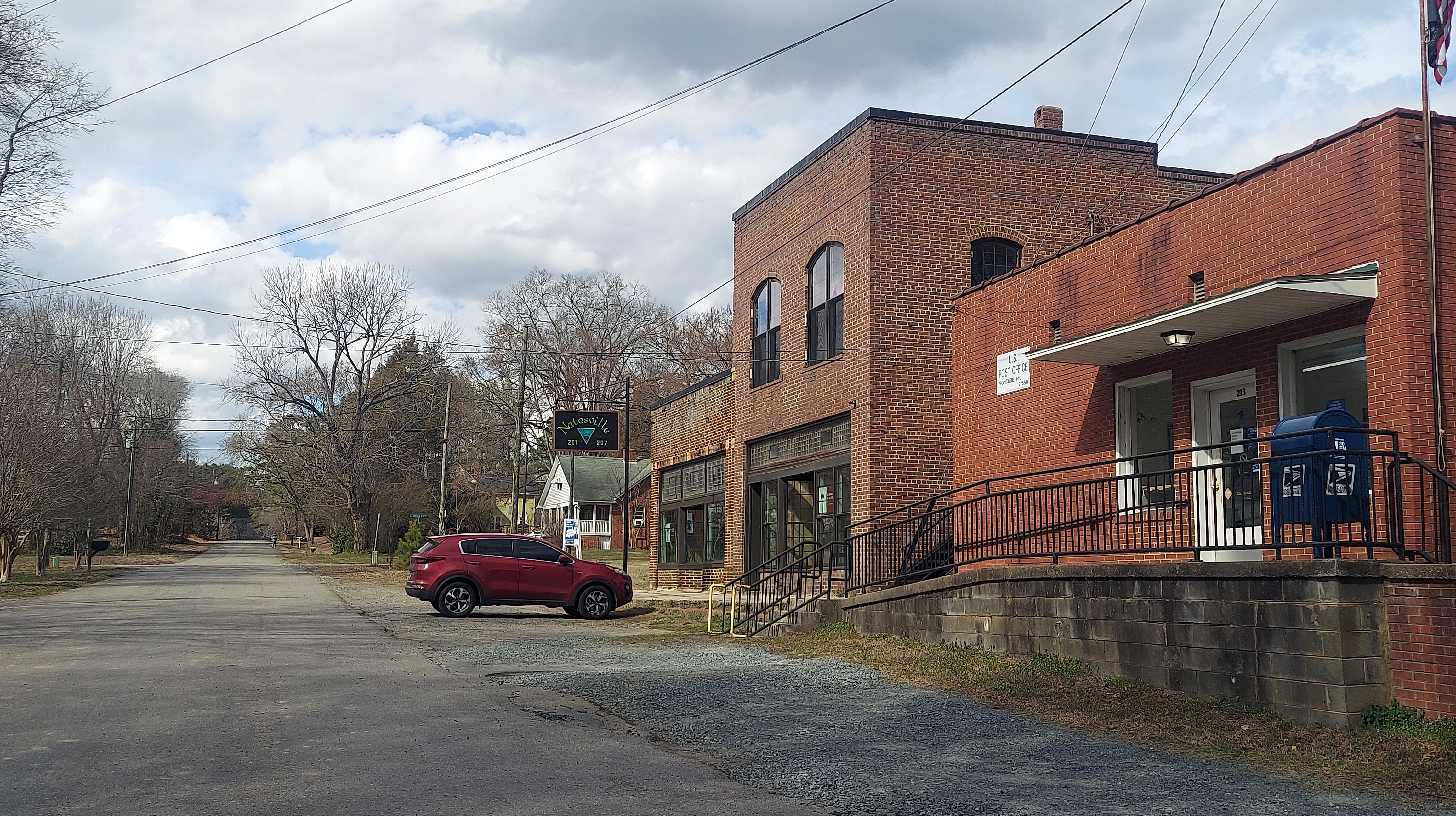
MONCURE is a small town at a significant location, where the Haw and Deep Rivers meet to form the Cape Fear, which flows to Fayetteville and then Wilmington. A few miles upstream on the Haw is the massive Jordan Lake Hydroelectric Dam; the Deep River has historic mills and dams along its length. The town itself feels nearly empty, yet signs of industry are everywhere: 3M, Fed Ex, the Brick plants, Southeast Fly Ash, Arauco, Duke Energy. A local has been hoping for the Vinfast Vietnamese electric vehicle factory to open soon nearby.
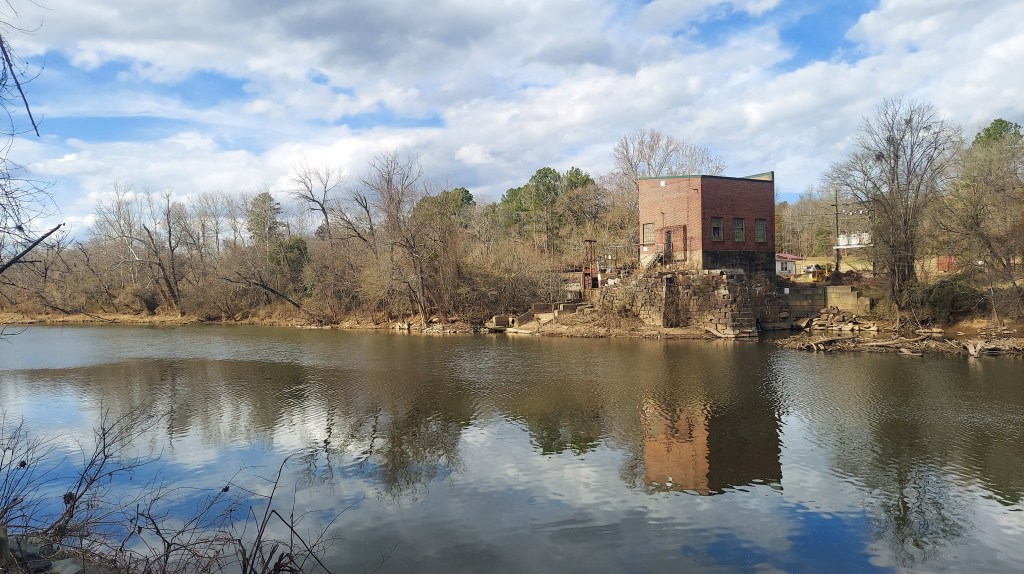


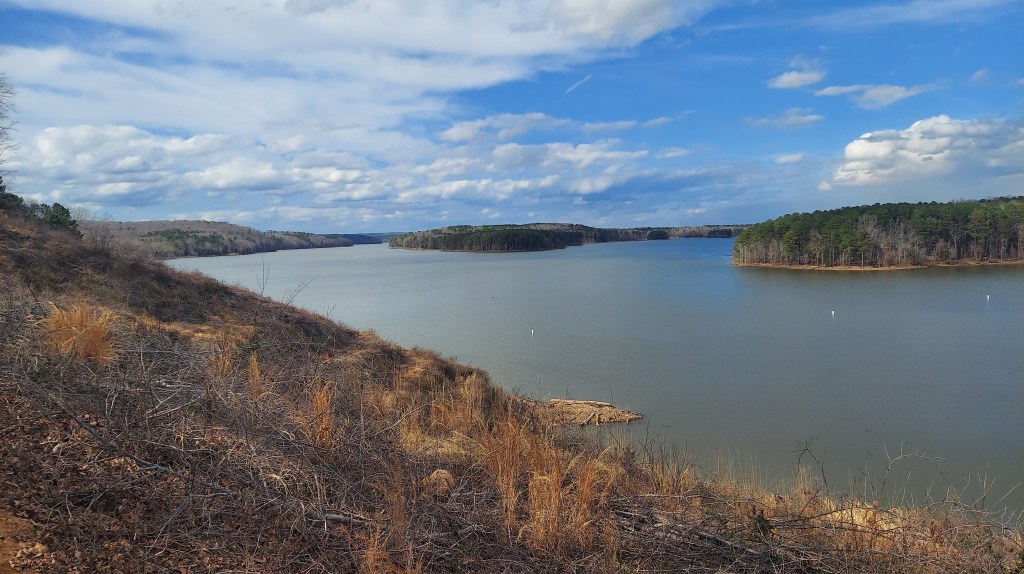

Looking out at Jordan Lake, it feels very peaceful. It’s also evident that I’m standing on the steeper western edge of the basin, which is noticeably flat going east. This lines up with the description of the basin as a “half-graben” — a formation like a rift valley where one side is steeper. I’ll describe the geology of the basin in more detail in the next entry.
TECHNICALLY, A BASIN
In the early 1900s, the northern part of the basin was called the “New Hope Valley,” for the New Hope river floodplain and its swampy tributaries between Raleigh, Durham, and Chapel Hill limiting the area’s development. There were some small agricultural communities and the Durham and South Carolina Railroad for tobacco and timber transport. (Remnants of this freight railroad exist now as the New Hope Valley railway and as the American Tobacco Trail.)

In the early 1970s the dam was built to make New Hope Reservoir (Jordan Lake), flooding some of these communities but also making the floodplain – one of the lower parts of the basin – a lake again. Jordan, “where the water goes down” should be a lake; though I lament the lost lands, it feels natural this way.
This earthwork happened during the same period when the Research Triangle Park was developing as a “tech ecosystem” to the east on slightly higher ground.

Lenovo, a Chinese computer company, has a corporate campus in RTP once occupied by Sony-Ericsson and IBM PC, with a lake and new growth pine forest. On this early spring-like day with varying weather, I walk on part of the paved trail between busy roads, parking lots and the forest, crossing creeks, thinking about the swampy Piedmont woodland this once was.

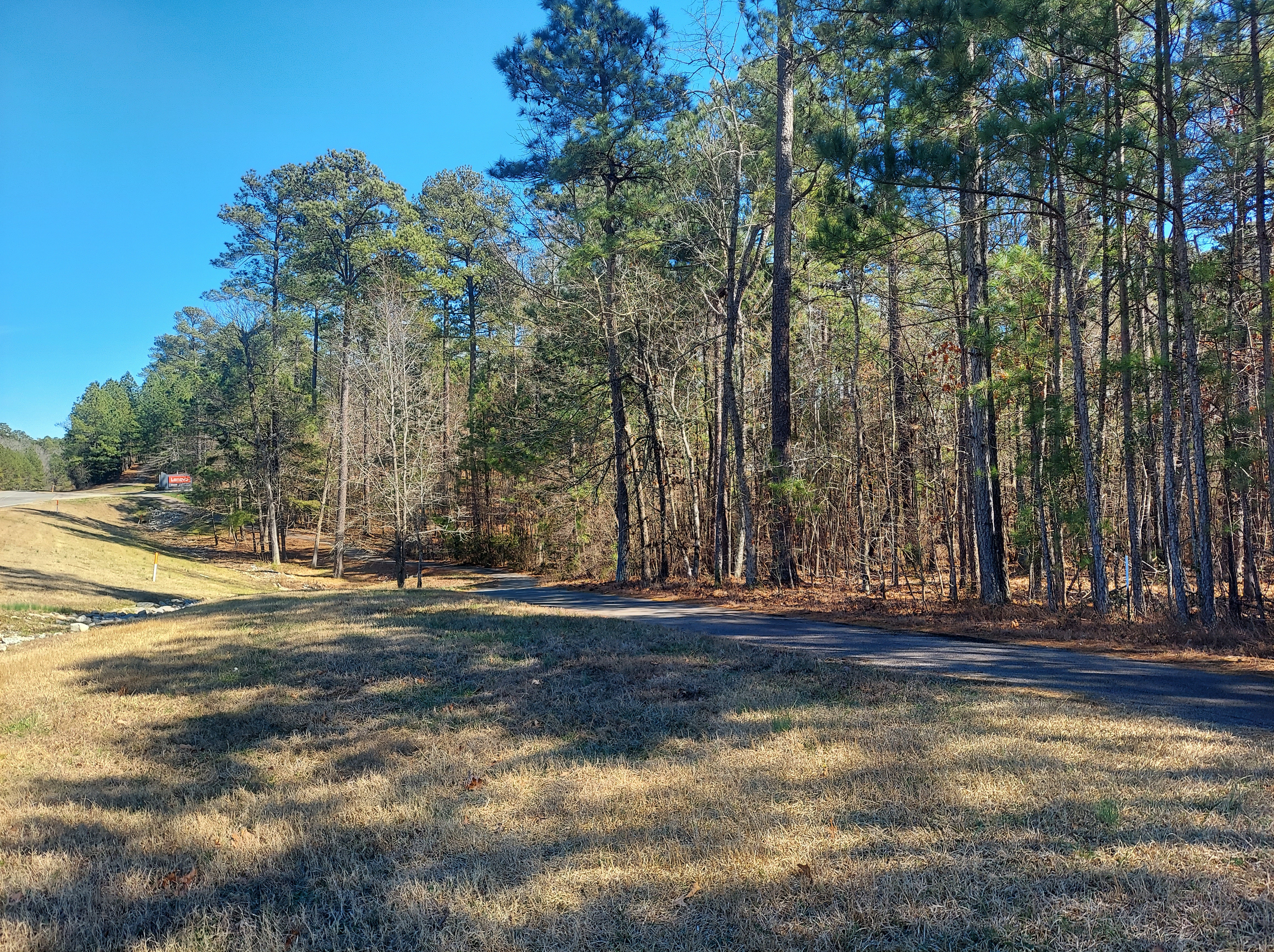
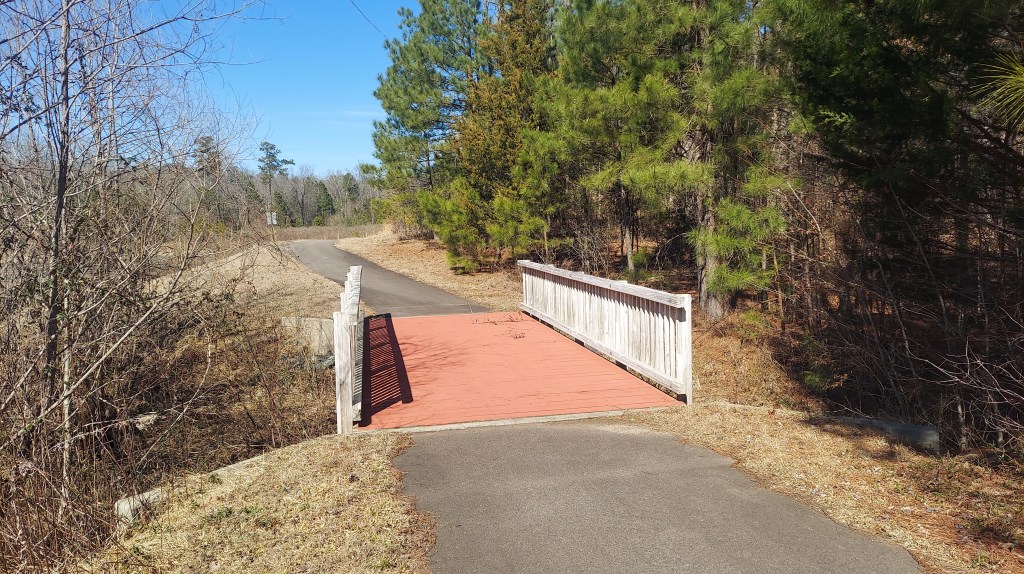
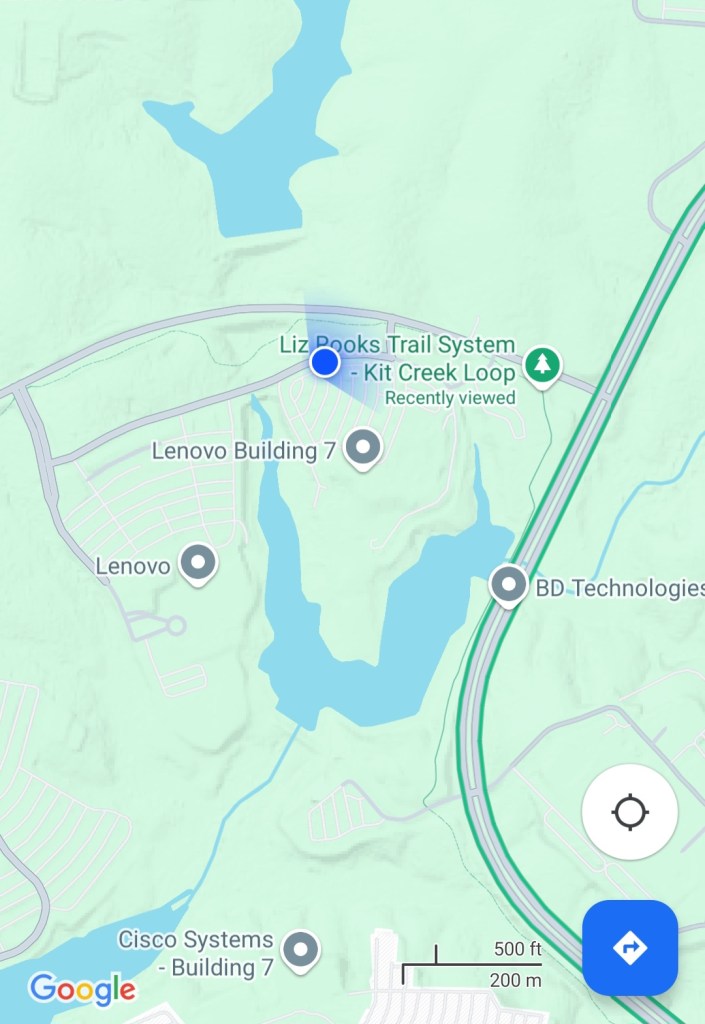
And the area around RTP is quickly developing, filling the piney lowland with housing complexes to accommodate people who work here and want to live nearby. In one way, it’s good to live close to work, but with a high environmental impact, and there is a risk of flooding. Also, the fast-moving traffic through here makes it difficult to carefully explore the geology and what nature there is.
Next week, I’ll return to Deep River and visit the namesake part of the basin upstream, where the coal beds and mines lie hidden near remnants of ironworks and concrete dams. Spring is coming, and it’s a good time to venture and reflect amid old and new growth.

Ambient music for the journey: Tim Hecker “Haunt me, Haunt me Do it Again” https://youtube.com/playlist?list=PLPNtNpeuf-sgUZftJIV_c4MCqWW3VBMCI&si=mLhSb1GDWG14uUJr
I will be releasing a new song “Brick Plant” on my Found Objects of Desire bandcamp page for Bandcamp Friday, but here are some more songs about bricks:
Other sources:
Triassic Fossils in the Deep River basin: https://www.sciencedaily.com/releases/1999/08/990818071044.htm?fbclid=IwY2xjawI1yWdleHRuA2FlbQIxMAABHSkv9jJSer0Xrd5G_twrSRhRcagl6SZ7rfGAAuEa8NXFqTwD_SVLUrvq7w_aem_qCvpXFjNyx_02avTITR2Ow
From Triangle Brick’s facebook page:https://www.facebook.com/share/p/1BzFx5Vrq2/
Triangle Conglomerates in the Deep River basin, NC Department of Environmental Quality https://www.deq.nc.gov/about/divisions/energy-mineral-and-land-resources/geoscience-education/geology-north-carolina-state-parks-and-other-protected-areas/triassic-conglomerates-deep-river-triassic-basin-morrisville-nc
Southeastern Geology, Volume 2 No. 4, June 1961 Published quarterly by the Dept of Geology, Duke University
Brick history https://www.handmadebrick.com/dir.cfm/BLOG/
Sanford: Brick City https://web.archive.org/web/20090216141238/http://downtownsanford.com/brickcapital_usa.htm
“Durham A-Z: B is for Brick” by the city of Durham
About Triangle Brick
https://www.trianglebrick.com/why-triangle-brick/our-story/
About General Shale’s “Moncure Collection” https://generalshale.com/product_collections/moncure-collection/
About the New Hope valley communities flooded by Jordan Lake: https://swampschool.org/history-emerges-at-jordan-lake-north-carolina/
About Research Triangle Park: https://www.rtp.org/history/
And as always, thank you for reading my stories and for your support! I look forward to a fulfilling season and more exploration.
–Arianna, March, 2025

 arianna's creative travels
2 thoughts on “Deep River Triassic Basin: A Grandmother of Industries”