December 27, 2022
The winter storm blew through before Christmas, freezing pipes and ponds across the Atlantic coastal plain. After a few cold dim days, the temperatures rose and sky cleared up again. Necessary is a nature walk and a visit to a ruin, before returning to Hampton Roads and home tasks.
The Neuse River, outside of Raleigh, flows over a short fall, a landmark and crossing spot to points east for the ages. It’s also on my path.
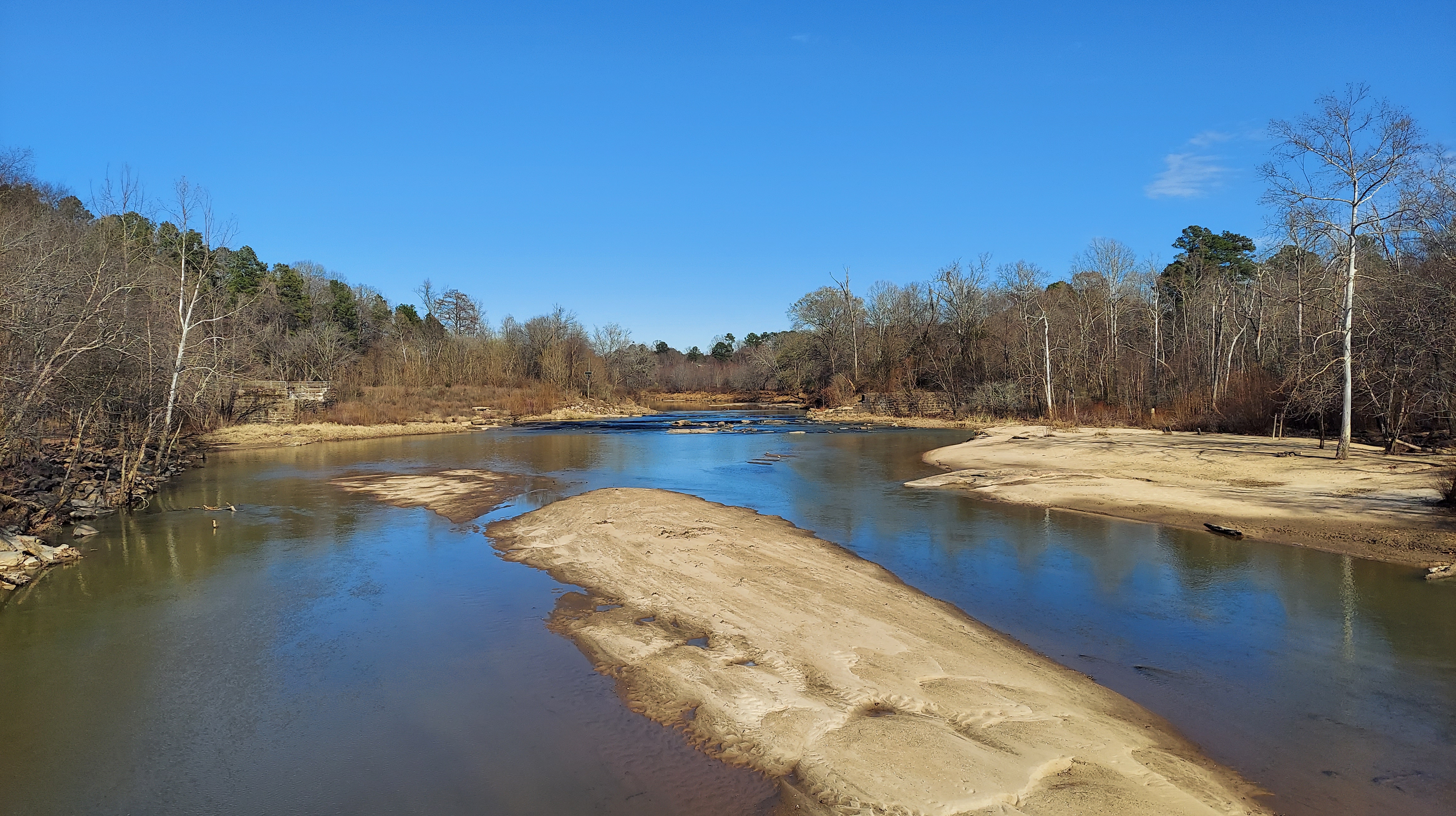

Around 1760, Williamsburg was booming as the Virginia colony capital and a center of commerce. North Carolina’s capital was at New Bern, downriver on the Neuse 100 miles or so where it widens into a tidal estuary. Here at the falls, a mill was built, using the water power to grind wheat and corn. This was the first of several mills at this site over the coming 200 years.
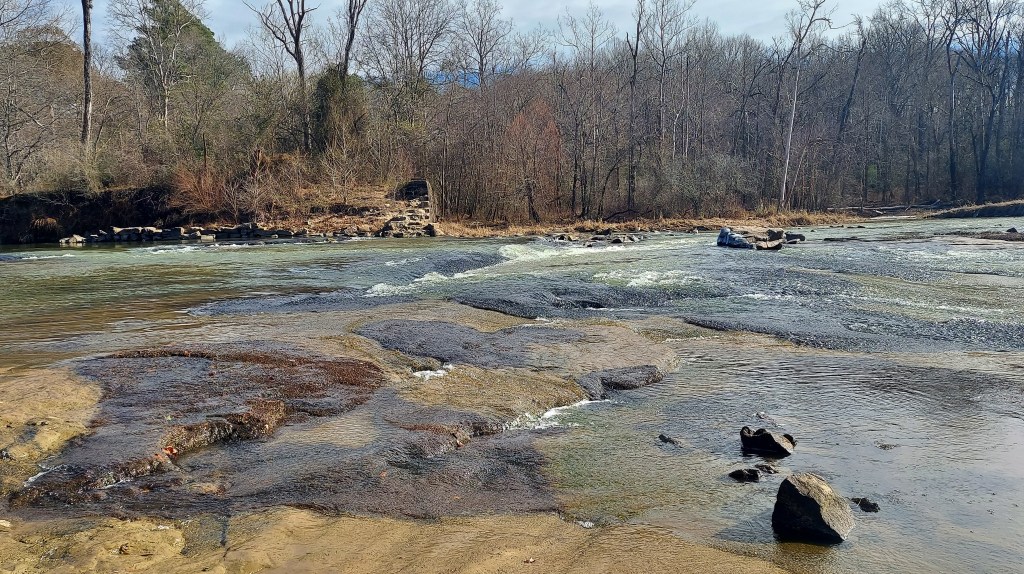
In 1899, the Raleigh Ice and Electric company purchased this land, had the current mill torn down and built the stone dam. The hydroelectric plant powered a trolley that ran from here six miles to Raleigh. Remains of the power house sit on the river’s west bank, seen in some of these photos. The dam was torn down in 2017 and some stone remains stand by the east bank, near the sand beach. The sandy area was known as “Raleigh Beach” for a period in the 1950s and 1960s.

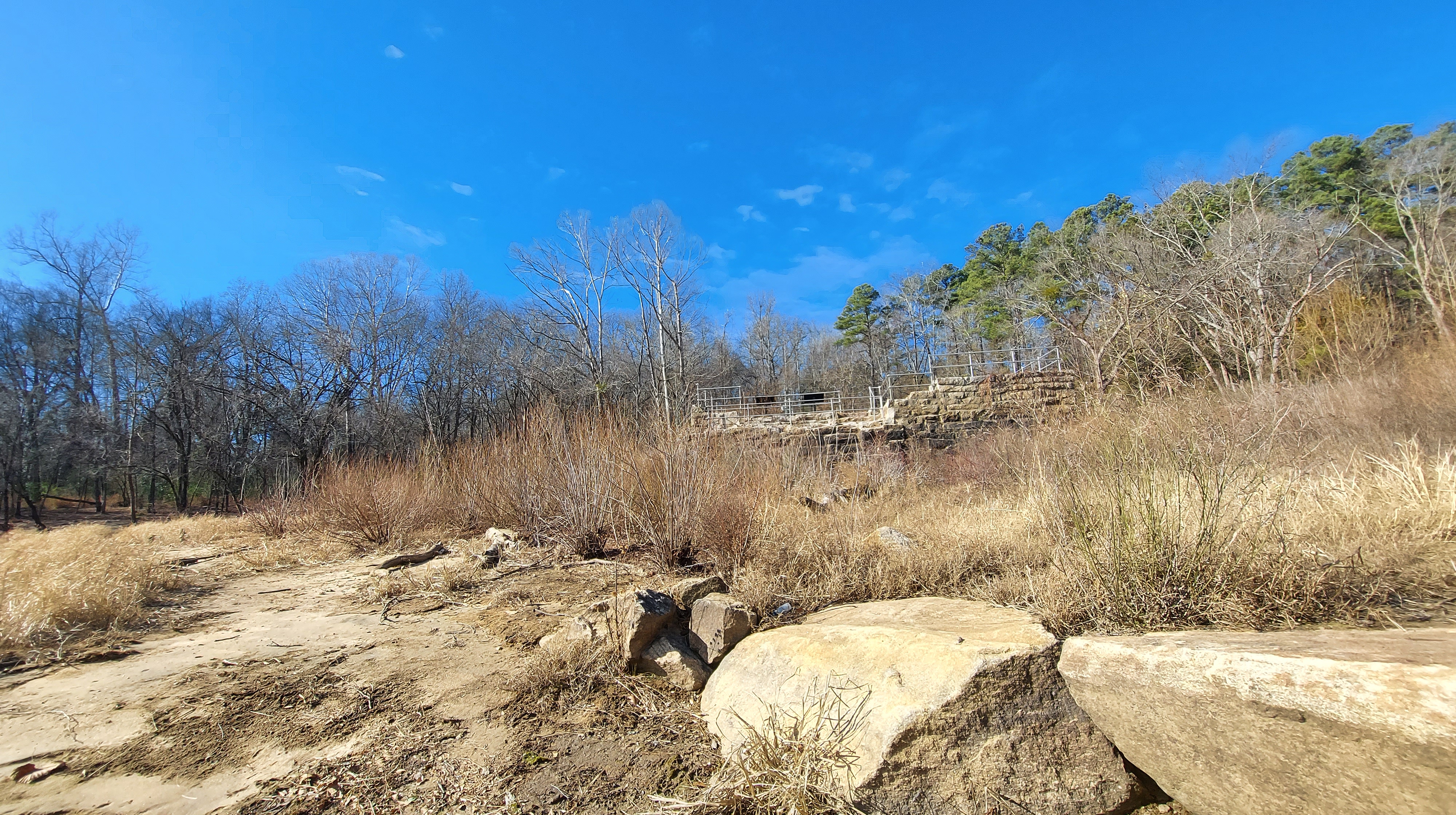
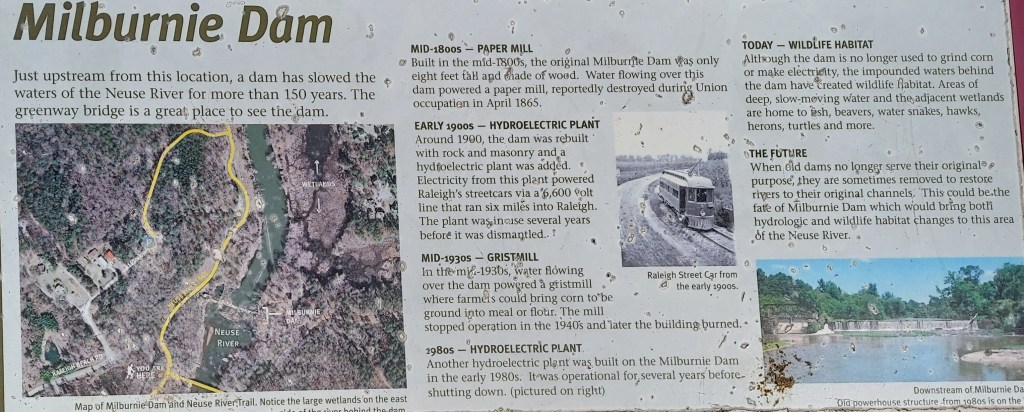
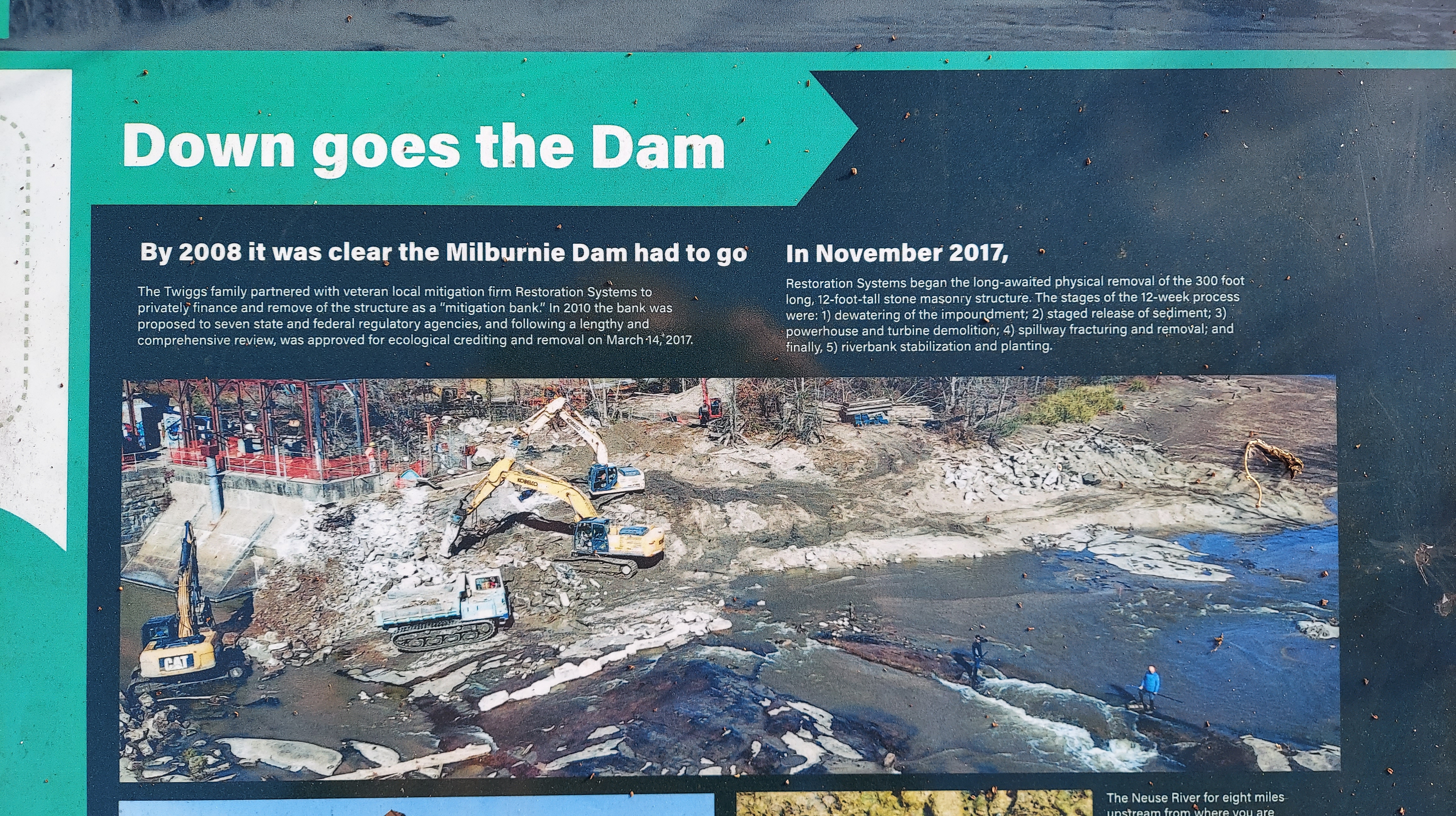
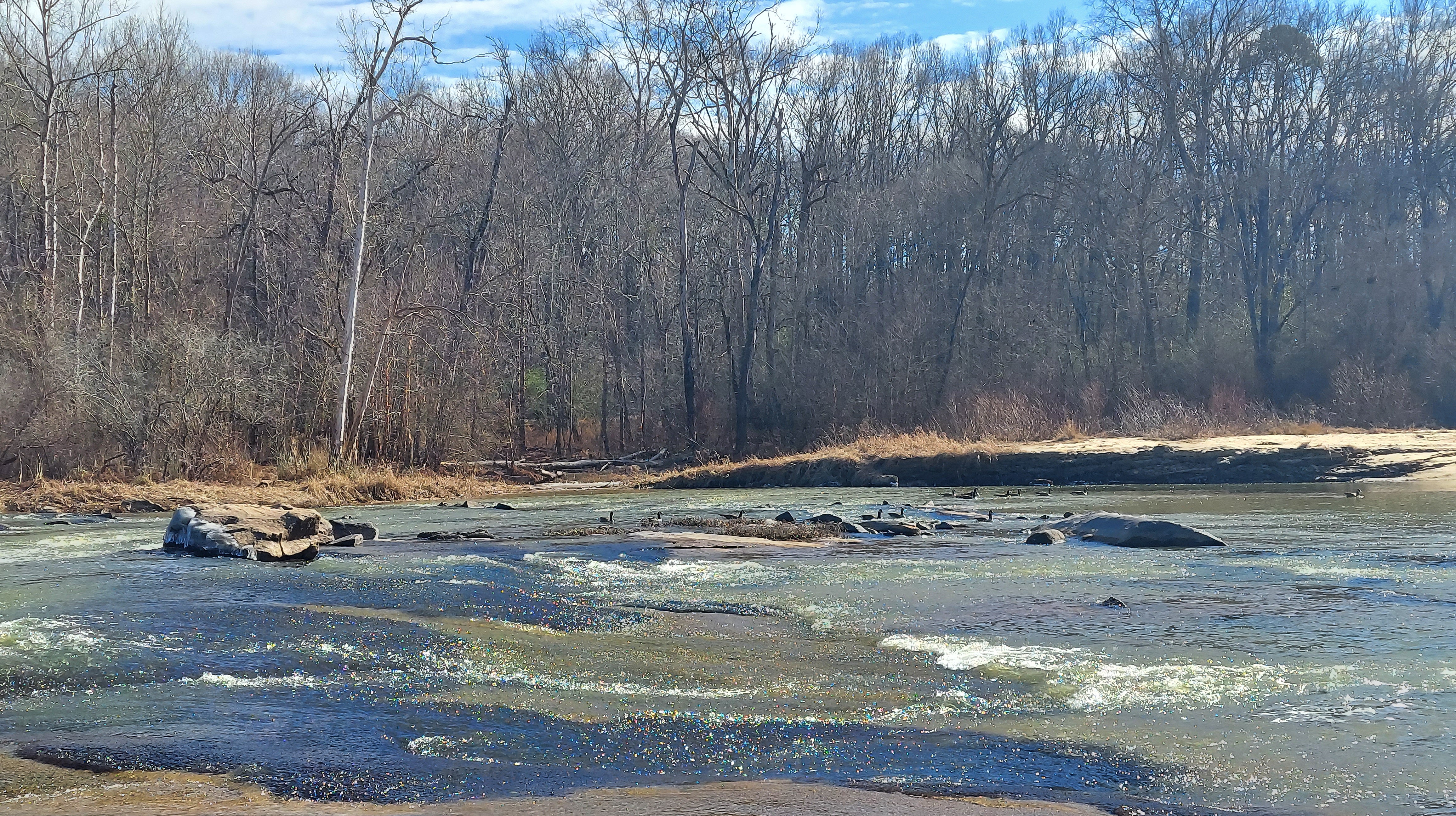
I didn’t visit here when the dam stood, though my uncle would come here on kayak float trips. I remember this being thought of as a dangerous spot, and the swift waters caused a few people to drown in the early 2000s.
Sitting on the large flat rocks by the river, water flowing is the only sound I hear. Waterfowl float smoothly across the falls, by the wall of stone where the dam once stood.
Sometimes she sank,
Loreena McKennitt, “The Bonny Swans,” adapted from a folk tale recorded in Scotland as “The Twa Sisters” *
sometimes she swam
Hey ho and me bonny-o
Until she came to a miller’s dam
The swans swim so bonny-o..
The name “milburnie” comes from the Old English words for “mill stream” and from a place in Cumbria, Northern England, with this name. In folklore of northwest Europe, mills and their water crossings were seen as a place to encounter Faerie folk and “subterranean” beings. One example is the German tale “The Nixie of the Mill-Pond” which was recorded by the Grimm brothers and included in their collection. Nix and other folk can enchant and entrap humans, such as the miller’s family, and offer challenges or turn them into other creatures in exchange for freedom or financial stability.
As he was walking across the mill dam, the first sunbeam was just appearing, and he heard something rippling in the pond.
“The Nixie in the Pond” (181), Jacob and Wilhelm Grimm, 1857 **
Turning around, he saw a beautiful woman rising slowly out of the water...He saw very well that she was the nixie of the pond, and he was so frightened that he did not know whether to run away or stay where he was.

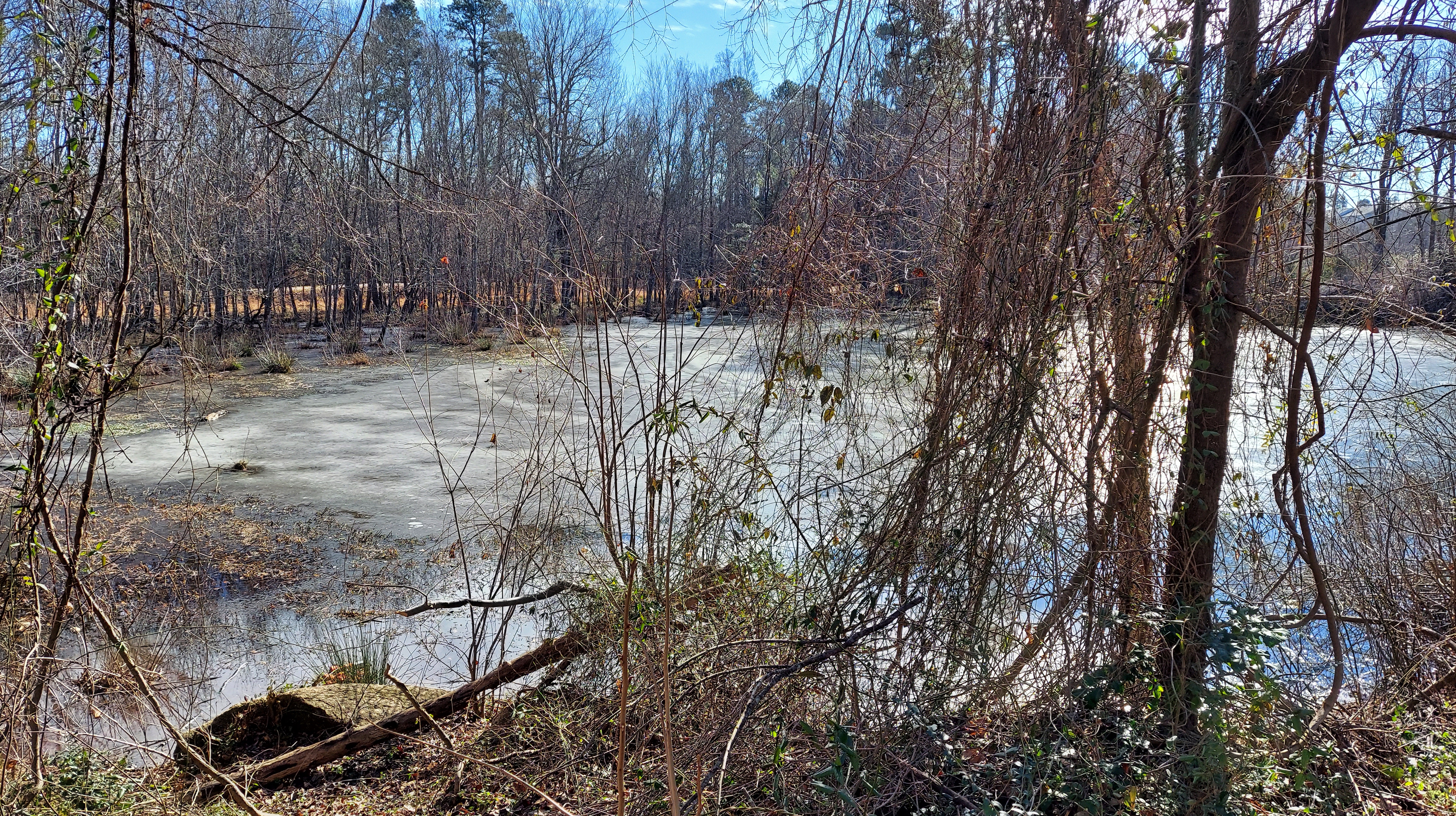
A warm, partly sunny hour goes by quickly and peacefully, and the return along the paved trail to the car is quiet and sentimental. Ice still glistens on the pond surfaces and rocks by the creek, and there’s not a footprint to be seen.

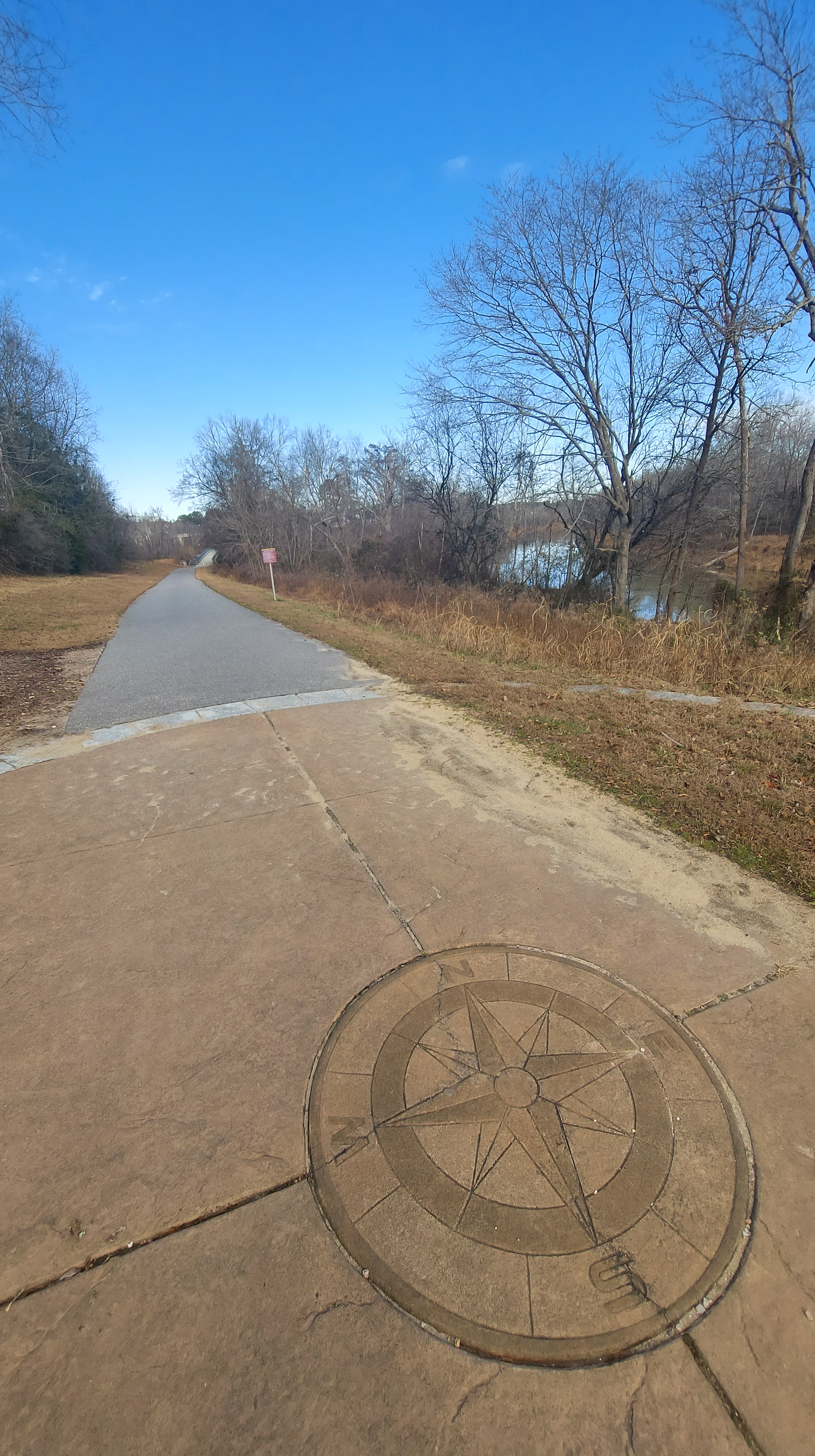
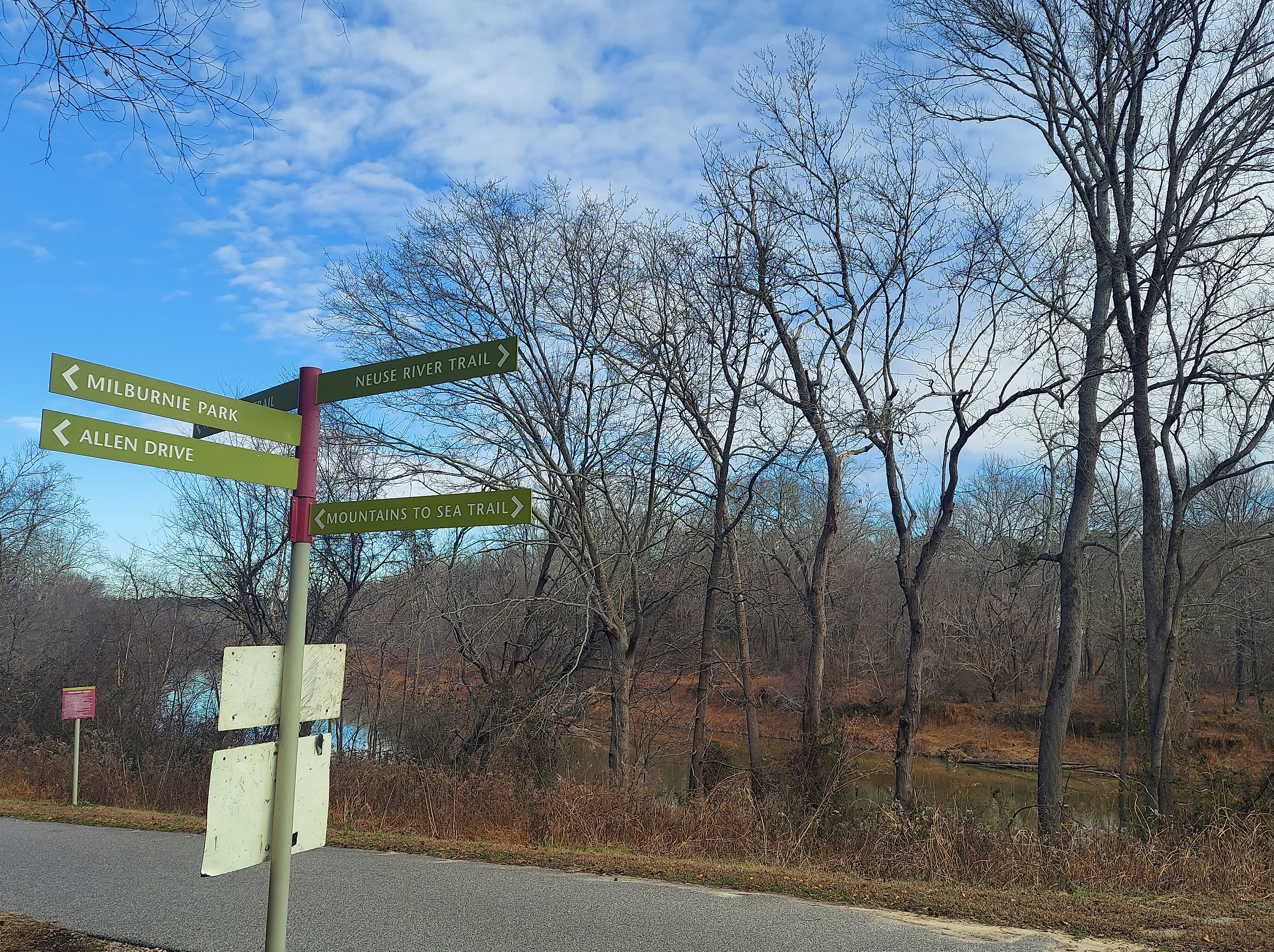
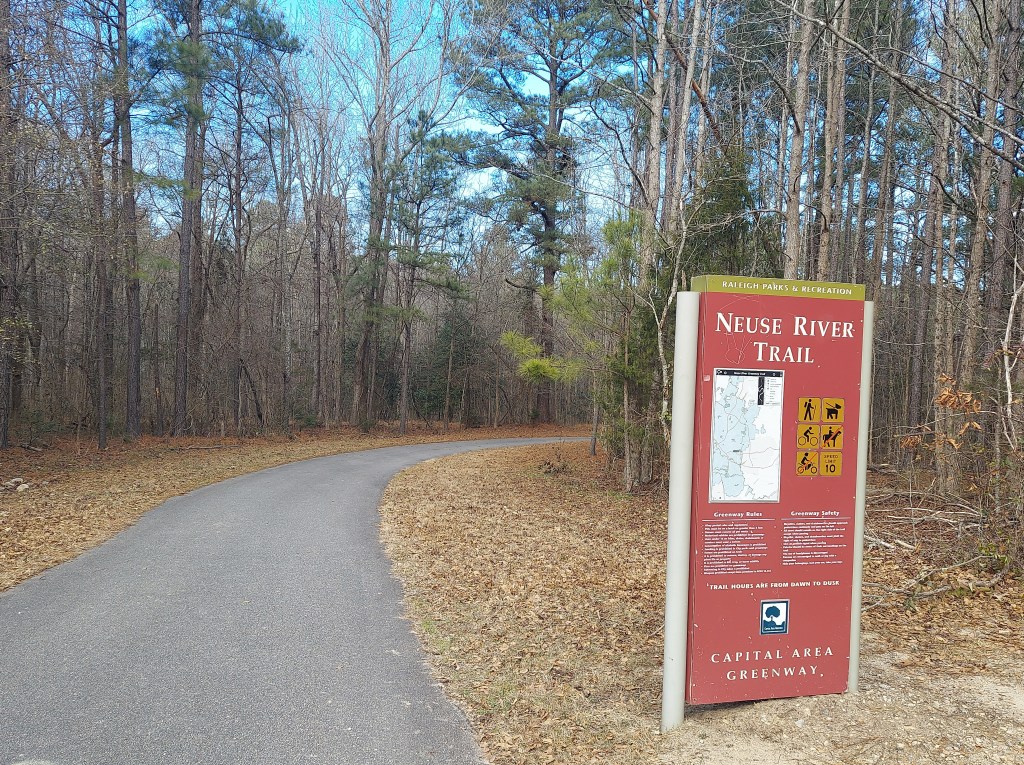
The Neuse River trail, which is part of the Raleigh area Greenway and the state-long Mountains-to-Sea Trail, passes through here, and crosses the river on a bridge below the falls. Parking is available on both sides of the river, but note that access is reached through neighborhoods. There is no cost for entry.
I’ll be visiting more mill ruins in future travels.
*About the tale “The Twa Sisters” https://www.google.com/amp/s/www.atlasobscura.com/articles/how-2-sisters-and-1-murder-inspired-500-songs.amp
**Full text of “The Nixie of the Millpond:” https://sites.pitt.edu/~dash/grimm181.html

 arianna's creative travels