September 2022, Norfolk, Virginia
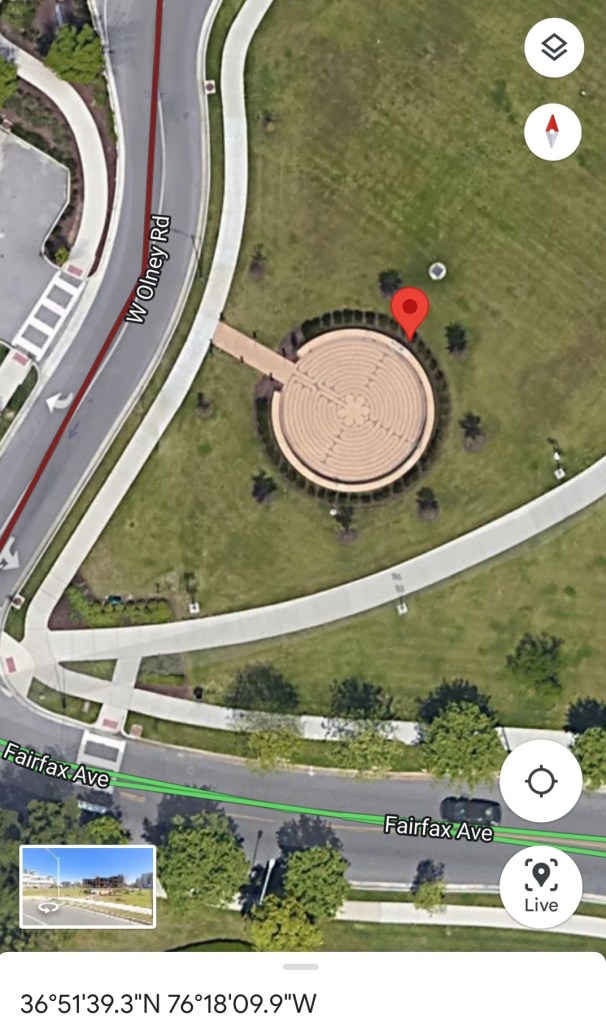
It’s Autumn Equinox in the northern hemisphere of Earth, where the position of the sun makes the day and night equal in length, for a short time. Though it’s warm now on the Chesapeake Bay, fall is now upon us, and the changes in weather will come soon. For me, celebrating the equinox includes walking a labyrinth at sundown, and the nearest public labyrinth is at little Plum Point park near downtown Norfolk, built in 2020.
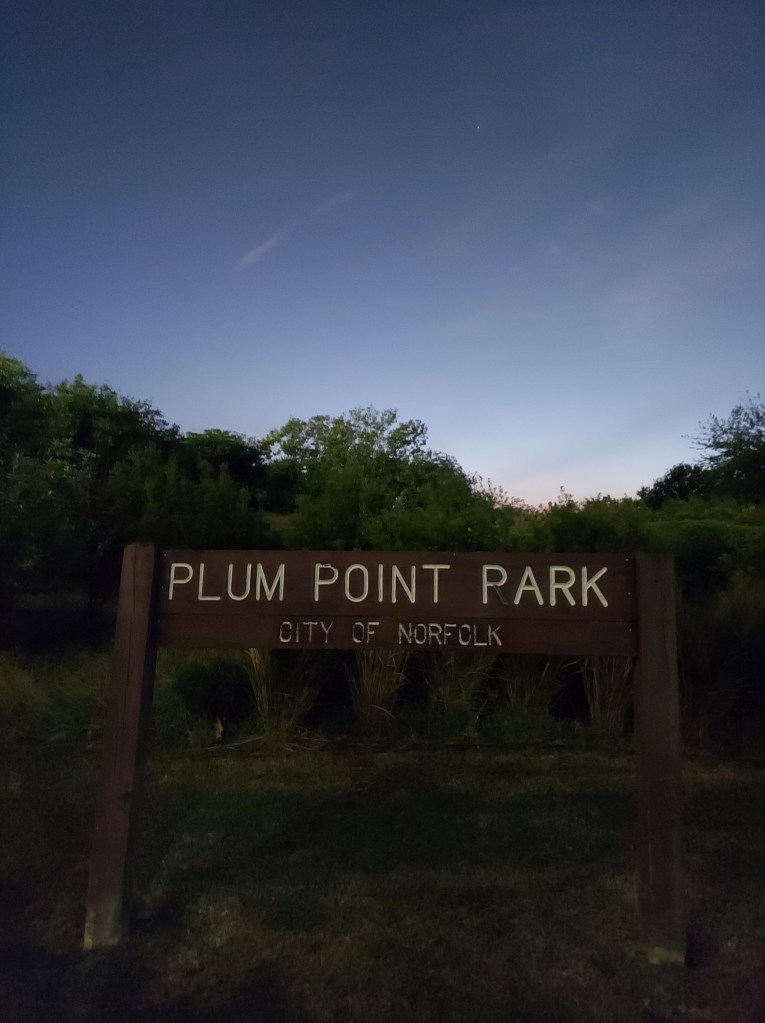
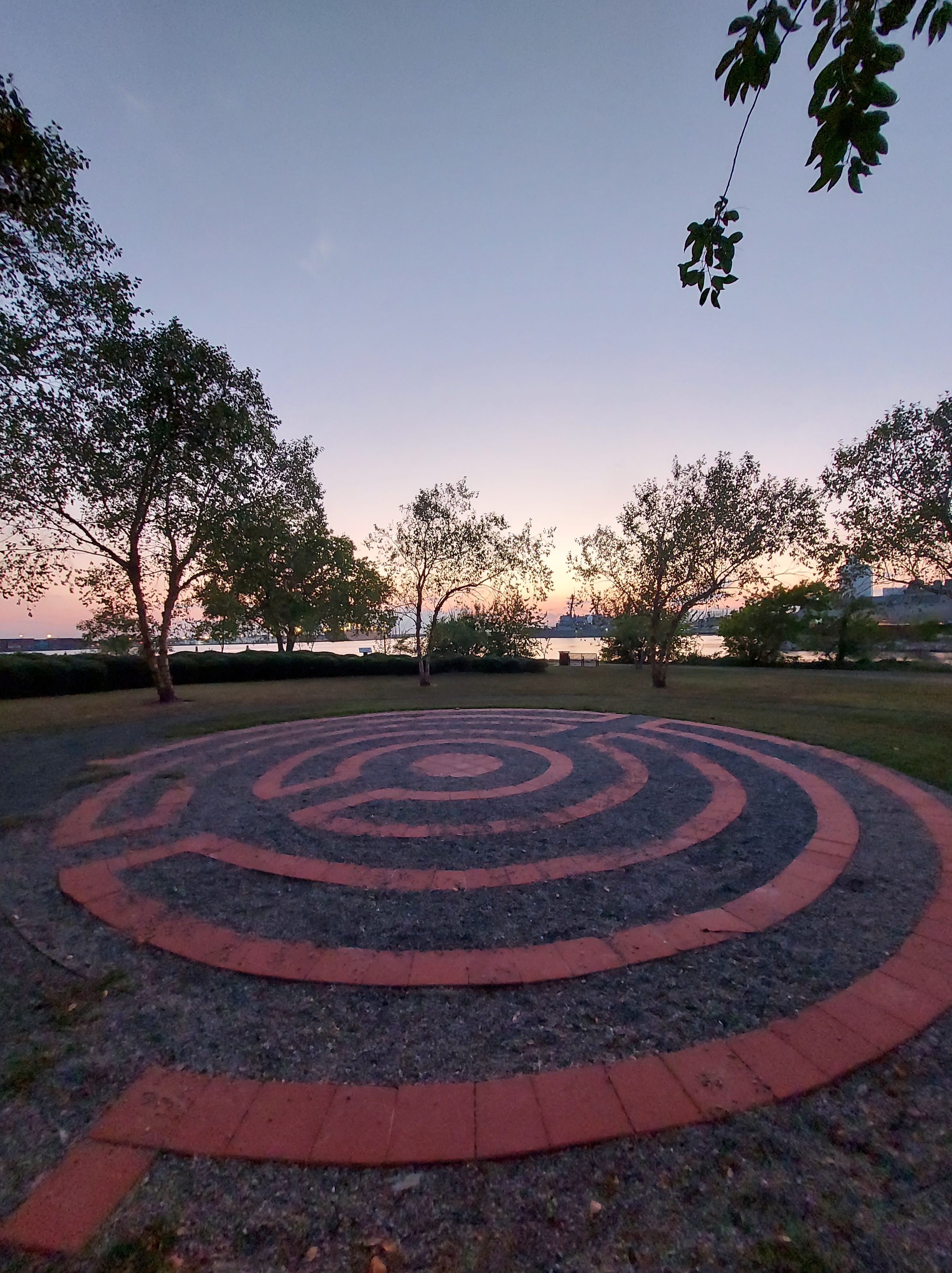

Plum Point park is built on land reclaimed from industry next to a marshy shore of the Elizabeth River. The Elizabeth River trail, paved bike/foot path, passes by here and connects to downtown Norfolk and Old Dominion University. From the small hilly peninsula, sunsets are magnificent, and sometimes passing ships are part of the scenery. The park also has a grassy meadow and some large shady trees in its compact space, but for me the labyrinth is what makes this park special. Set on the western edge of the hill to face the water, this walkable labyrinth of brick in a bed of small stones seems designed with the Sunset in mind. It’s wonderful every time.
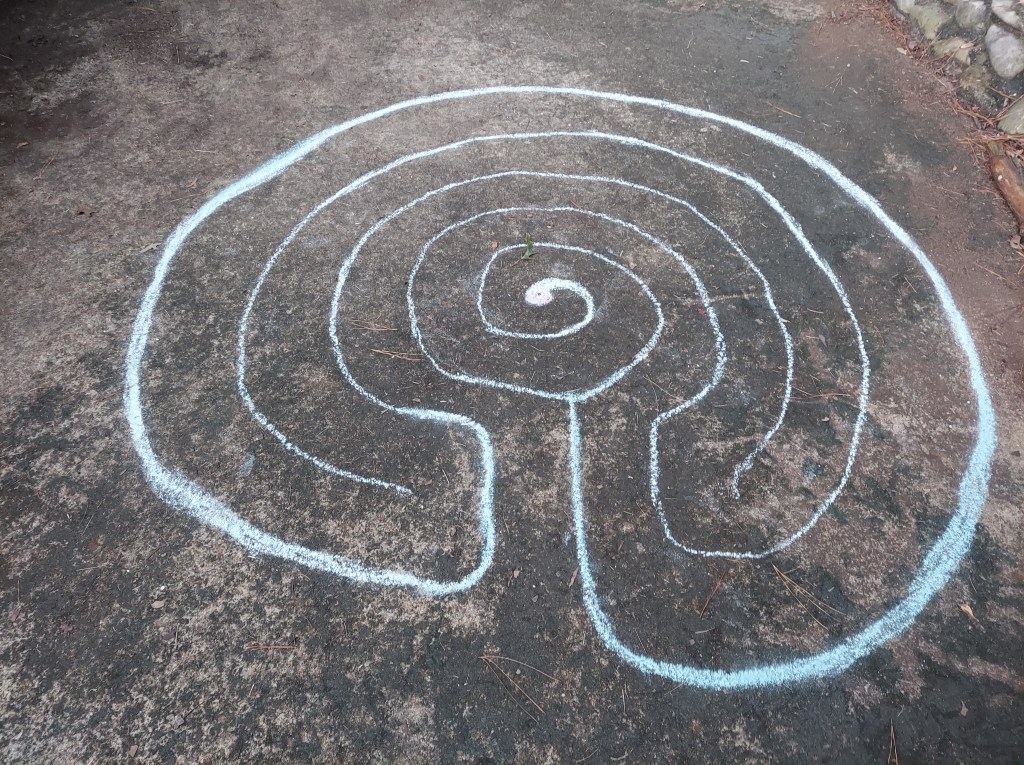
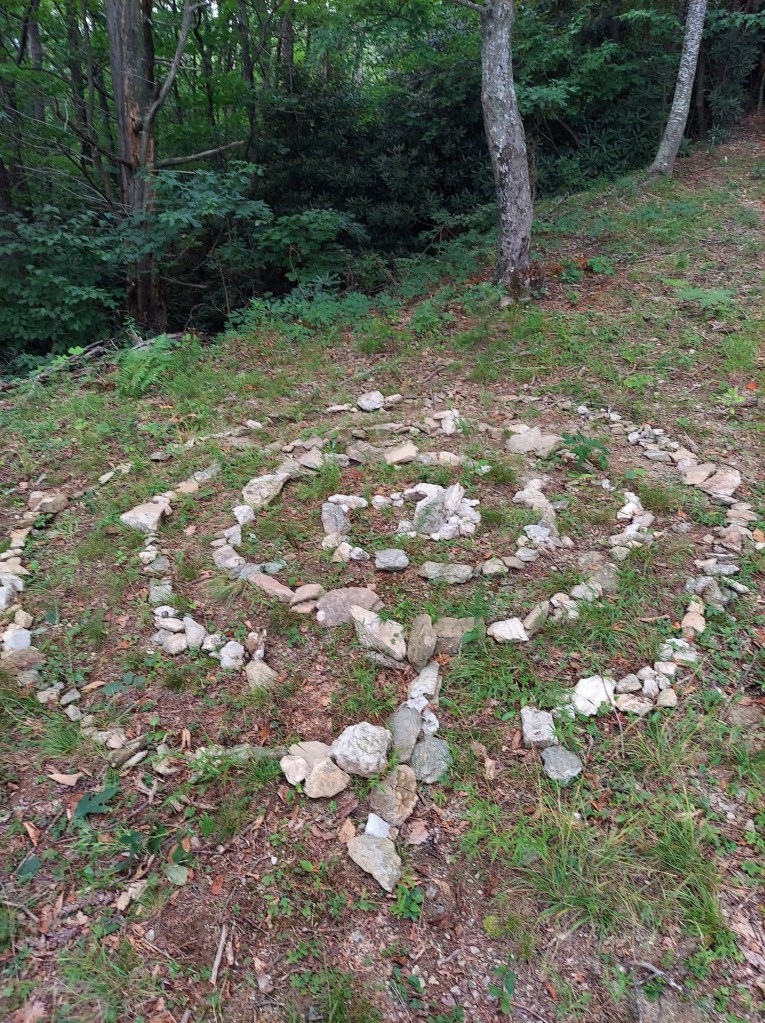
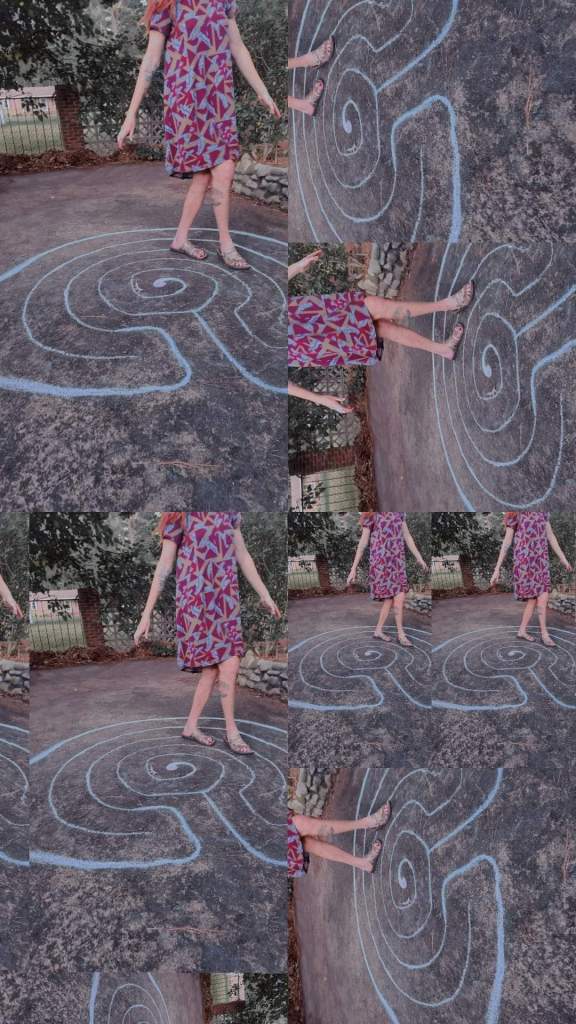
There are a few ways to draw a labyrinth. The “classical” style, which radiates as a single path around a central cross or Y, is considered the original form, found at archeological sites across Europe and Asia. My stone labyrinth at Fancy Gap, for example, uses a Y as its base surrounded by a spiral, and it’s the design I prefer for walking “the path inward.”
Another common form is the “Chartres” or medieval style, named for the complex labyrinth inside the Chartres Cathedral in France, symbolizing “the long winding path toward salvation.” I’ve seen labyrinths of this pattern in courtyards of churches, and the labyrinth outside Edgar Cayce ARE in Virginia Beach is said to be a replica of the one in the Chartres Cathedral ( with two dolphins in the center).
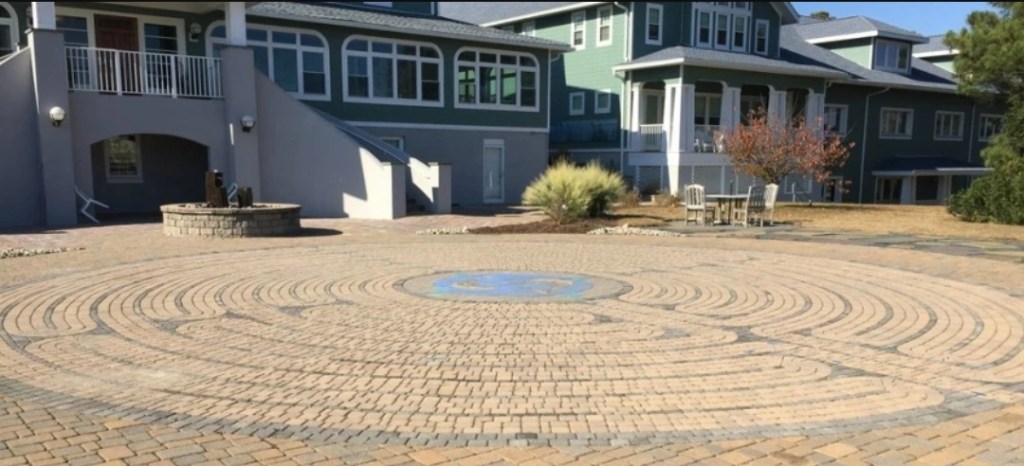
The Plum Point Labyrinth uses a different pattern. The center can be reached directly by gravel path from the entrance; following the brick is a seperate unicursal journey around and near the center, then across to the opposite side and back to the entrance. I do not know the name of this style, but visiting here in March inspired me to build my own labyrinths.
Using the worldwide labyrinth locator, it turns out there are six walkable labyrinths around Hampton Roads ( including Williamsburg). Most of them are connected to churches, and two are on hospital grounds. The Plum Point one is near a hospital building, too, though oddly it’s not listed on the locator. Wondering now how many folks walk these local labyrinths. I’m going to try to locate some of them.
One might think it’s strange for a church to have a legit labyrinth, but this one behind Ascension Episcopal off Talbot Hall in north Norfolk is the best I’ve seen in the area. (I found it on the locator) Its unicursal brick design is a mix of the Classical and Medieval styles, and is surrounded by a lush green area behind the church, near a dry river marsh. Nothing overly Christian about it, and I didn’t have to talk to anyone to access it.
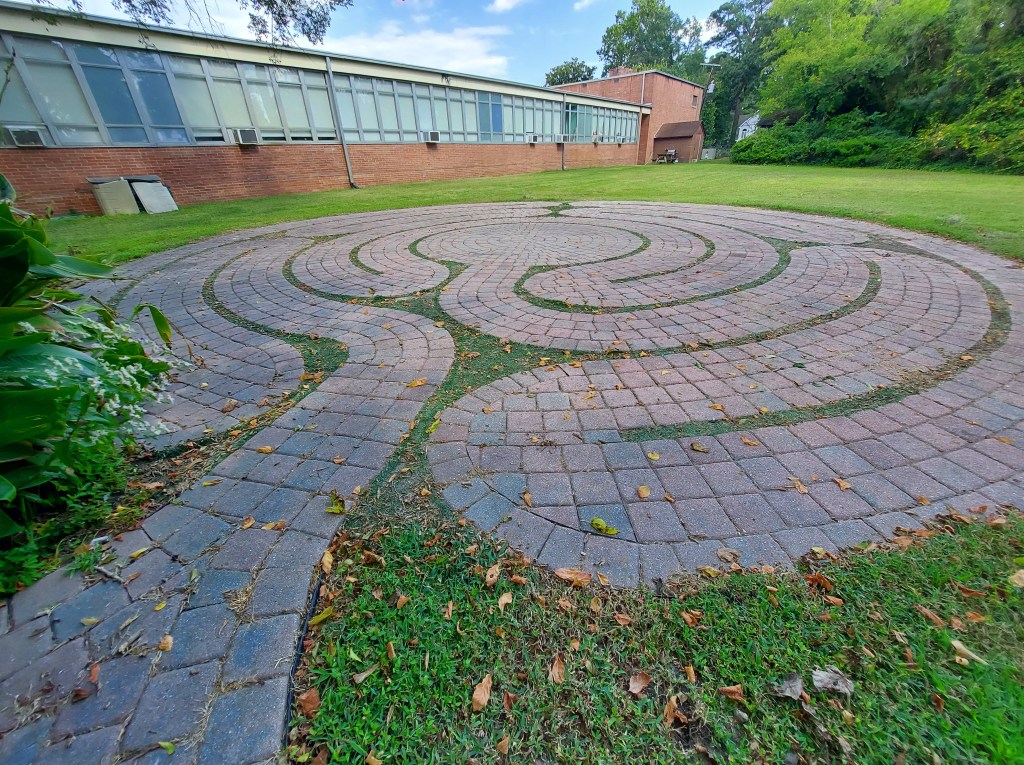
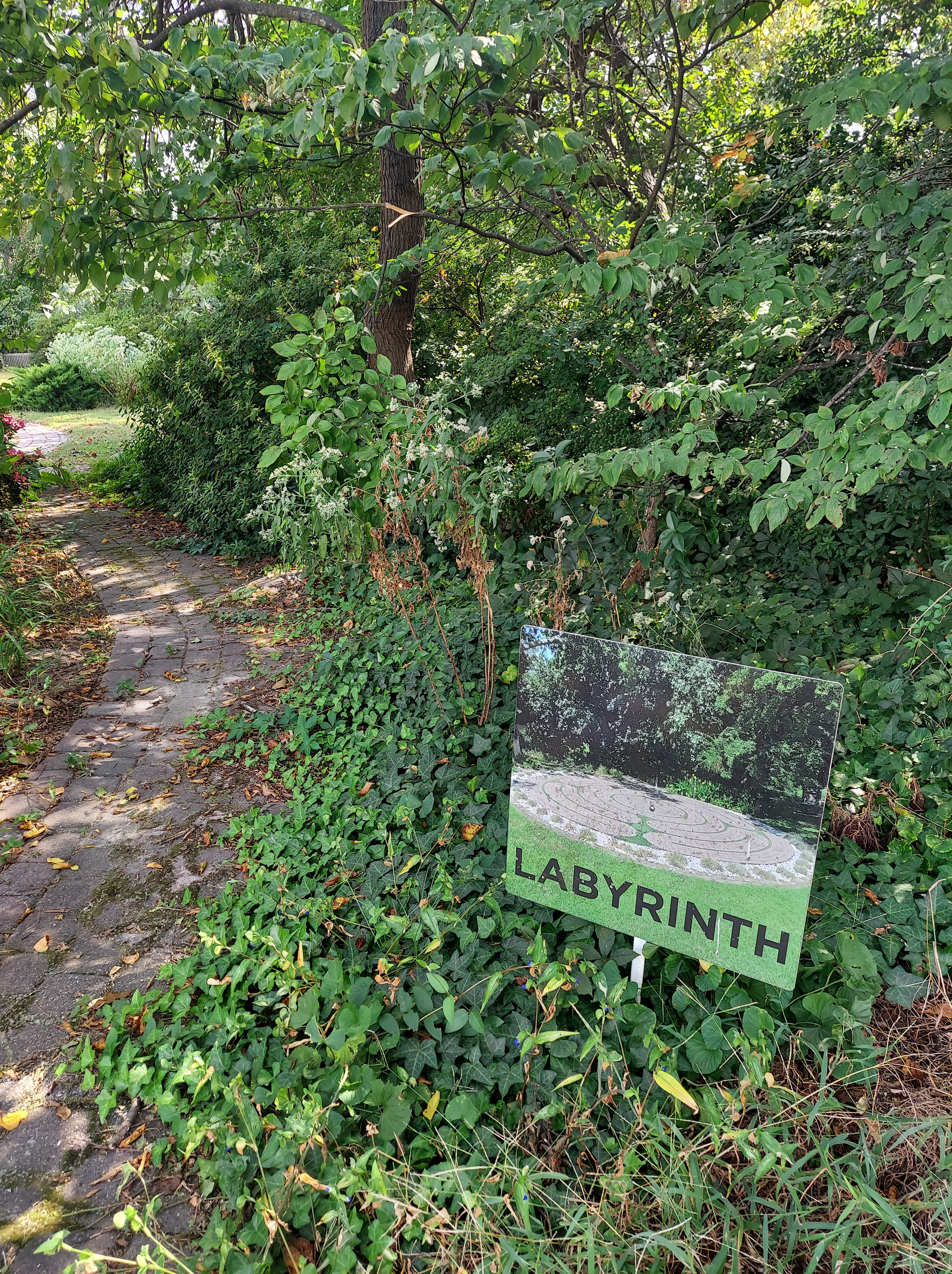

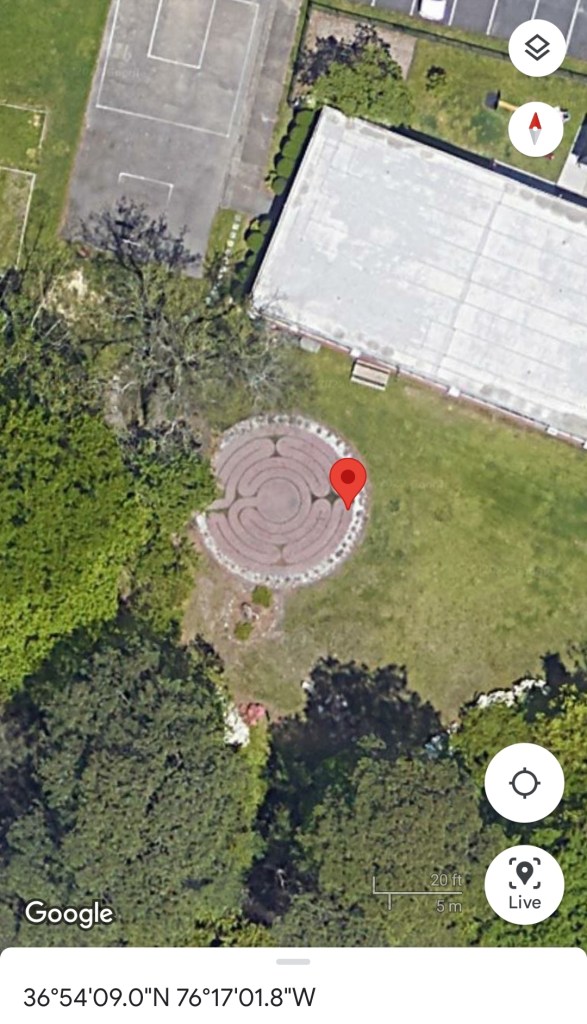
At publication, it is night and the autumnal equinox has passed. Labyrinths have been found, drawn and shared, and it has been sweet. Here is some music to inspire your walks, and a few informative links. Happy fall and many blessings.
https://labyrinthlocator.com/home
https://labyrinthos.net/locations.html
The Santa Rosa Labyrinth, a modern style designed by Lea Goode-Harris and her group in California

 arianna's creative travels