Time of visit: mid November, 2015
After a stay at Oak Flat camp (previous post), I go east to visit the archaological site Besh-ba-gowah in the mining town of Globe. This is the peak of fall leaf colors in this area, and along US-60 streaks of orange line the washes of the Pinal Mountains.
Besh-ba-gowah, well hidden from the modern town center, means ‘place of metal’ in the Apache language and once referred to this entire area (again, see Oak Flat post about mining history in the Pinales), but was applied to this pueblo along Pinal Creek, built by the Salado culture and occupied between 1150 and the mid 1400’s.

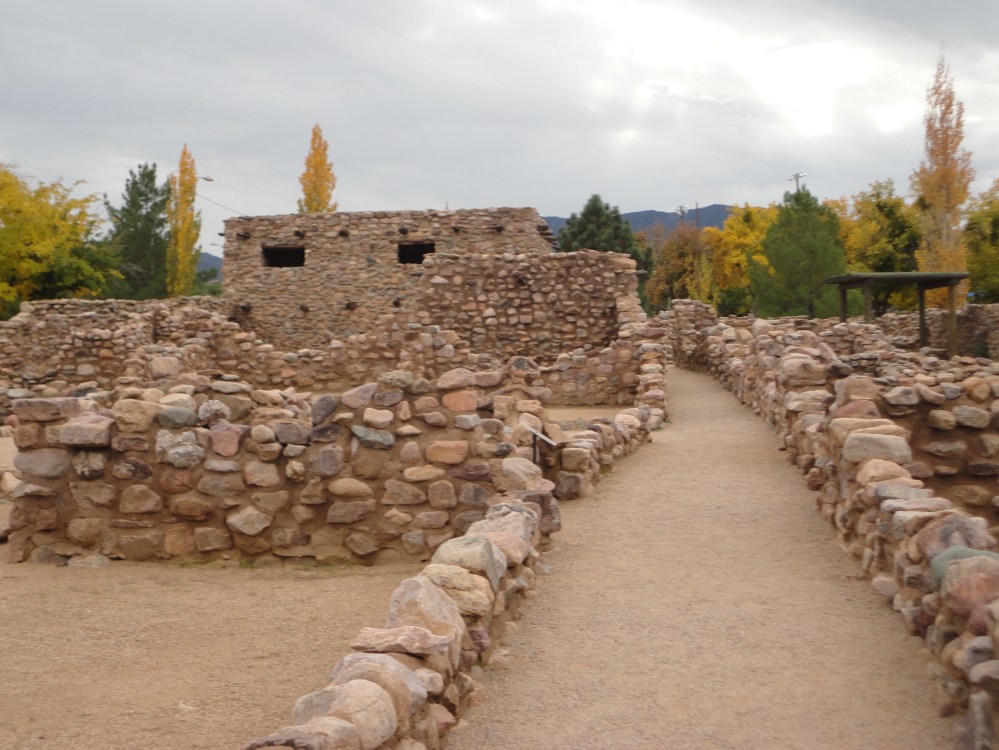
The pueblo once had 200 rooms, built over the ages with different stone work techniques and . Around the main plaza are the somewhat preserved rooms for crafting and creation, with areas for shell jewelry, gourds, basketry, pottery, and weaving.


at least 3 stonework techniques are visible in this room


The Salado people are named by archaeologists for the Salt River, in the valley north of here, where the culture would have centered. Due to the transitional climate of the region, the Salado (or what ever they called themselves) were able to farm crops and gather resources that are a mix of more highland and lowland. For example, the Chich’il Emery Oak acorns from the mountains were available, as were the maize and cotton, as well as the agave for weaving. The location also allowed for trading with cultures to the north, west, and south. Below are some of the Salado baskets and pottery that were found here on site, now kept in the museum:


Ceremonial room with altar and hearth area for offerings

Milling corn with a provided stone, as part of the exhibit
Here are links to the park site for Besh-ba-gowah and other Salado sites such as Tonto National Monument in the Tonto Basin north of the Salt River.

 arianna's creative travels