JUNE 2015
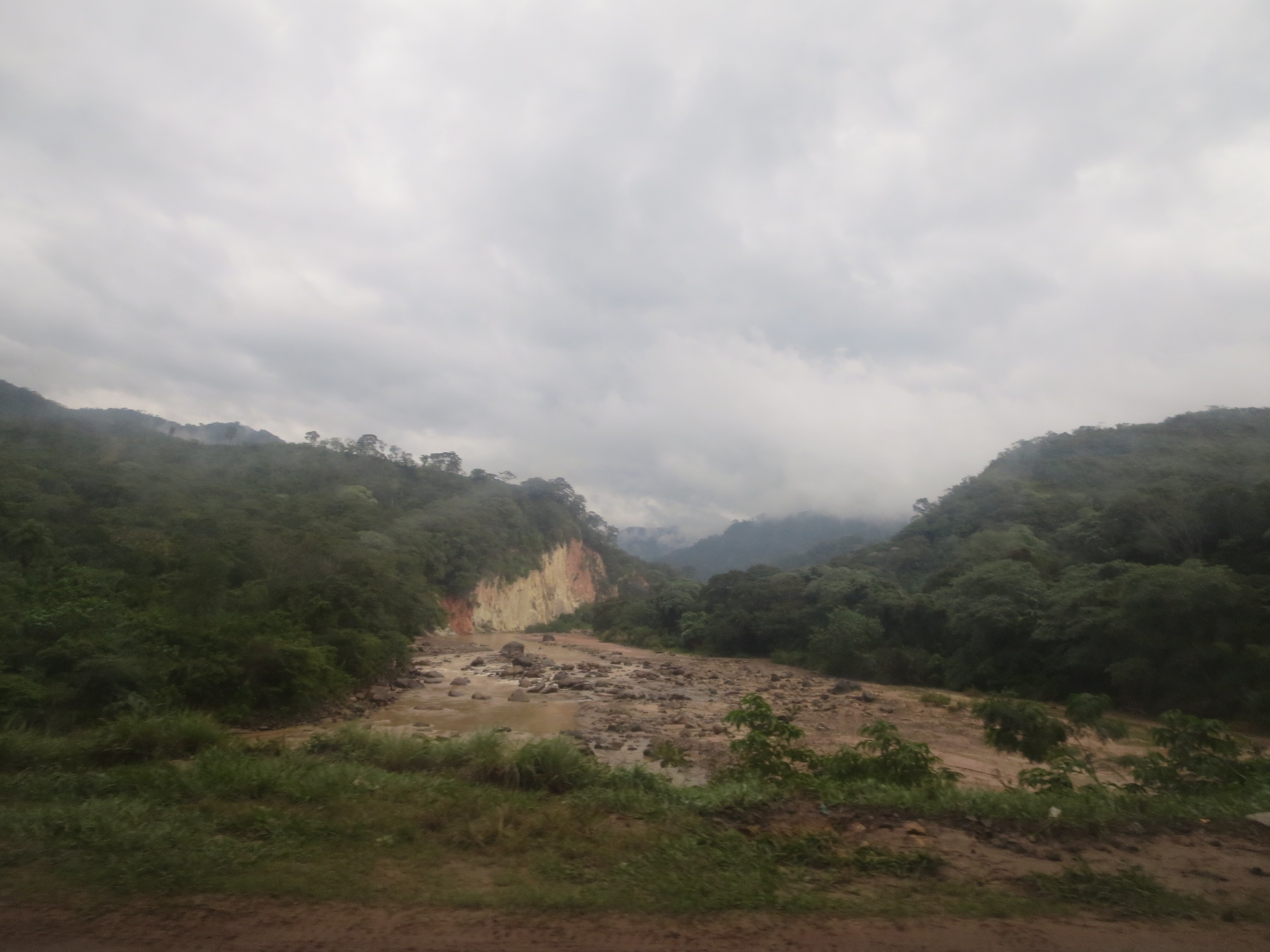
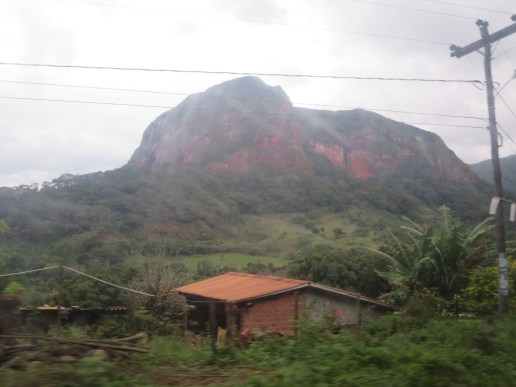
The southern cloud forest starts to the west of the Santa Cruz lowlands. Following the slow curvy rise of the Pirai river into the low mountains, the crowded combi climbs through the canyon and its soft dirt carretera. There are small waterfalls and towering red rock faces covered in green. The air smells fresh and trees shake in the breeze. It’s sensory ecstasy.
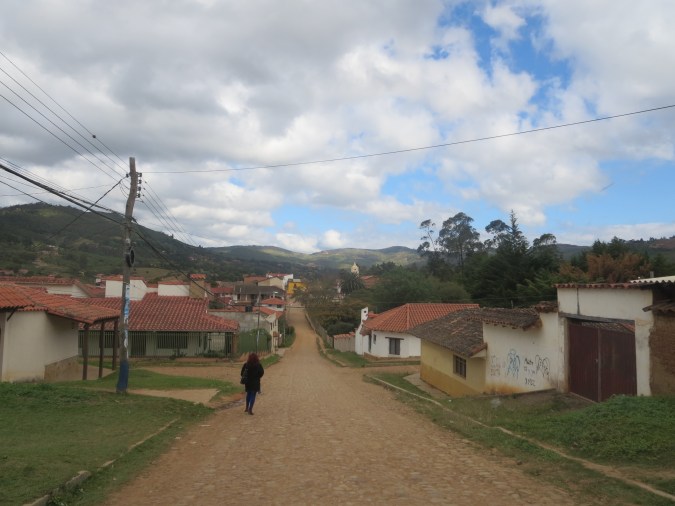
Three hours inward and high in these hills is the archaological site ‘El Fuerte’ and the modern artist and tourist town of Samaipata. This area is known for large natural parks like Amboro, coca farms, and being a good place to hide from the law, but it’s winter and off tourist season. The tree-covered plaza and humble streets are quiet, with few people out on this cloudy June weekend, but this town’s energy is sweet and pure.
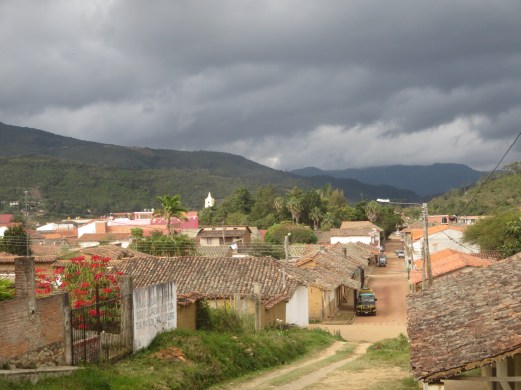

The name ‘Samaipata’ is of Quechua origin and means ‘a high place for resting/descanso en las alturas.’ In its modern incarnation, it is clearly that — calm with clean air, and an ideal place for Cruceños to have a summer home or to heal, make art and teach, like my friend’s family friend Luly Gutierrez, who has a cultural center, art studio, and artesania store here on Calle Bolivar.
For about 900 years, beginning around 800 CE, it was the major ceremonial and trading center of the area. The historical site, named ‘El Fuerte’ by Spaniards who used it as a fortress from 1550 onward, is notable for the multiple levels of cultures building on top of the previous ones.
The giant curved sandstone rock, the major part of the site, was sculpted and developed by the Chane´ people (of Arawakan origin, from the Amazon regions) and is unique for its size, shape, and setting. It has been referred to as the “largest cut-stone structure on earth” (source?). On the up-facing surface, large carvings of a jaguar, puma, the back of a snake, and an object called “the 5 magicians” were carved and are more or less still visible.
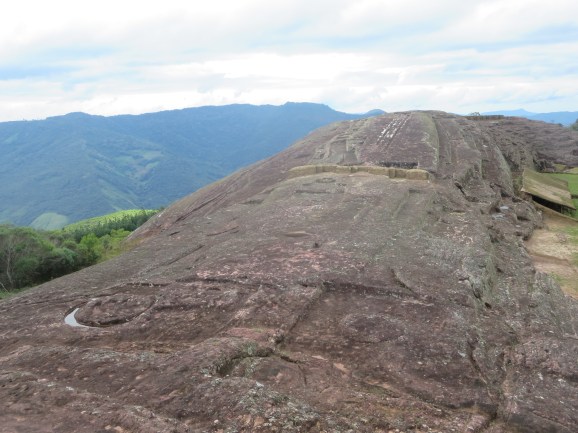
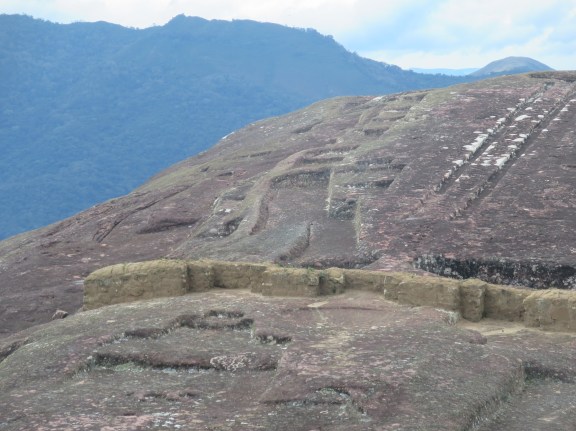
On the sides are many temple areas and carved niches for holding mummies or statues. From the hillside below, the eroded, lichen-covered sandstone monolith looks like a ship set for direct contact with the spirit world.
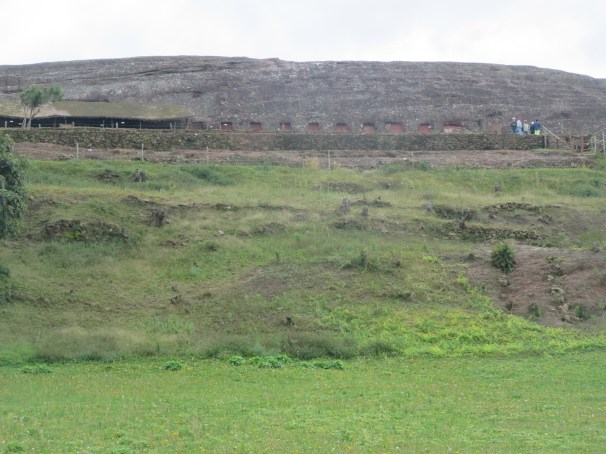
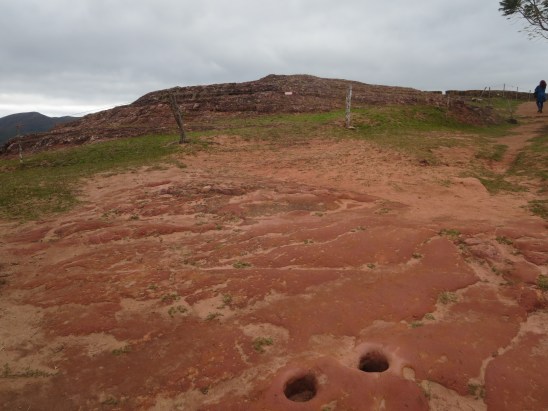
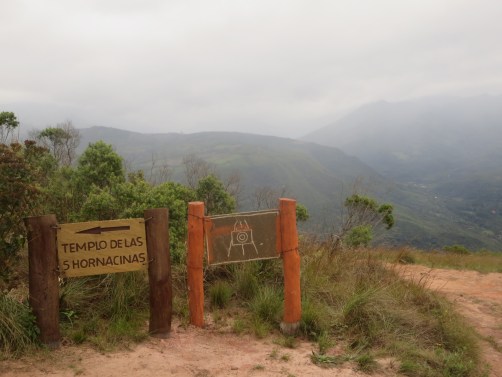
On top of the sandstone and on surrounding flat spots, the Inka built a city around 1400 CE. Well-cut stone walls remain, of the cancha plaza (marketplace), temple, tambo (multi-functional storage buildings), residential mounds, and more. The Inka also used the existing Chane´ niches and sculptures for festivities, ceremonies, and astrological observations.
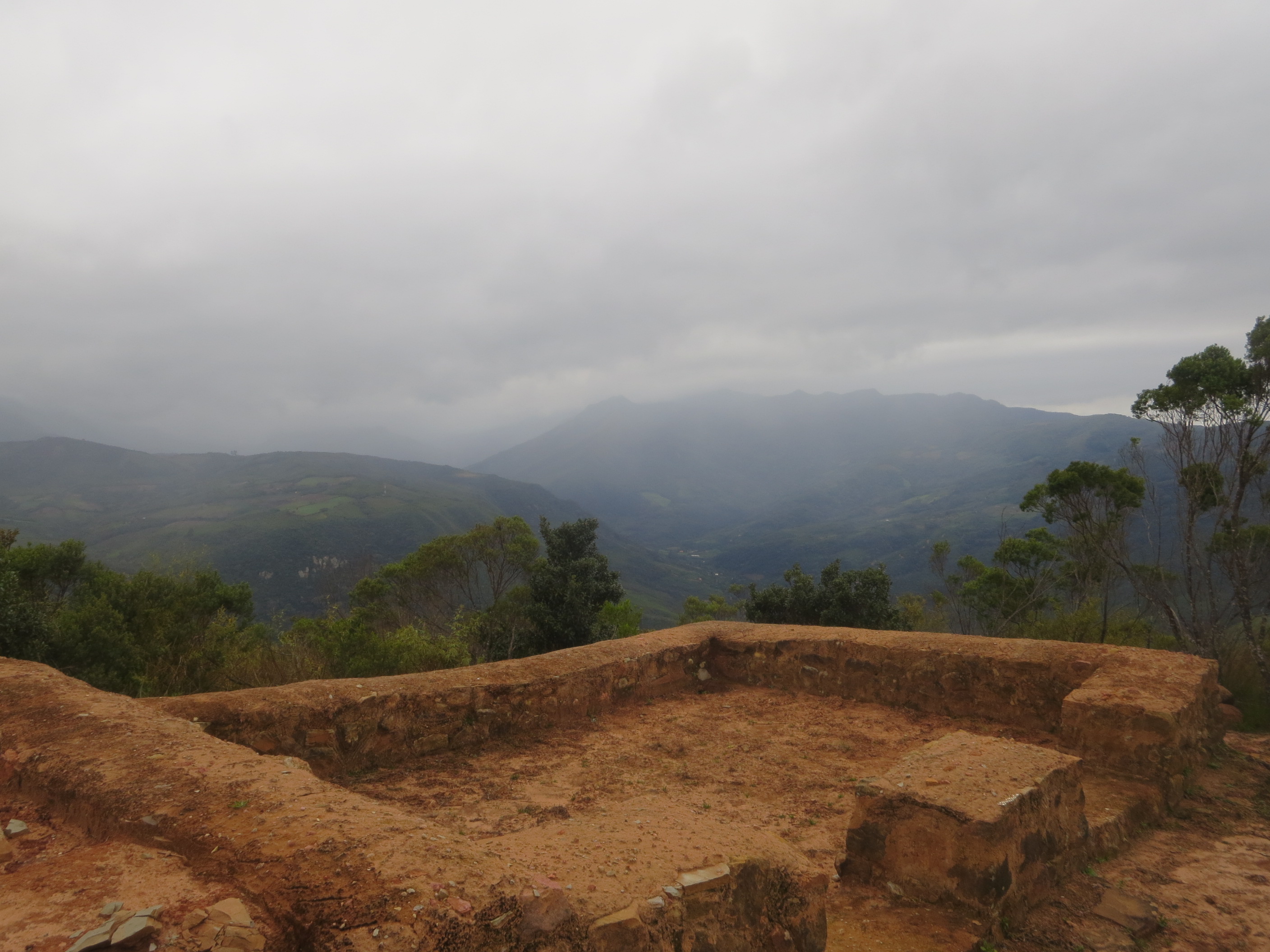

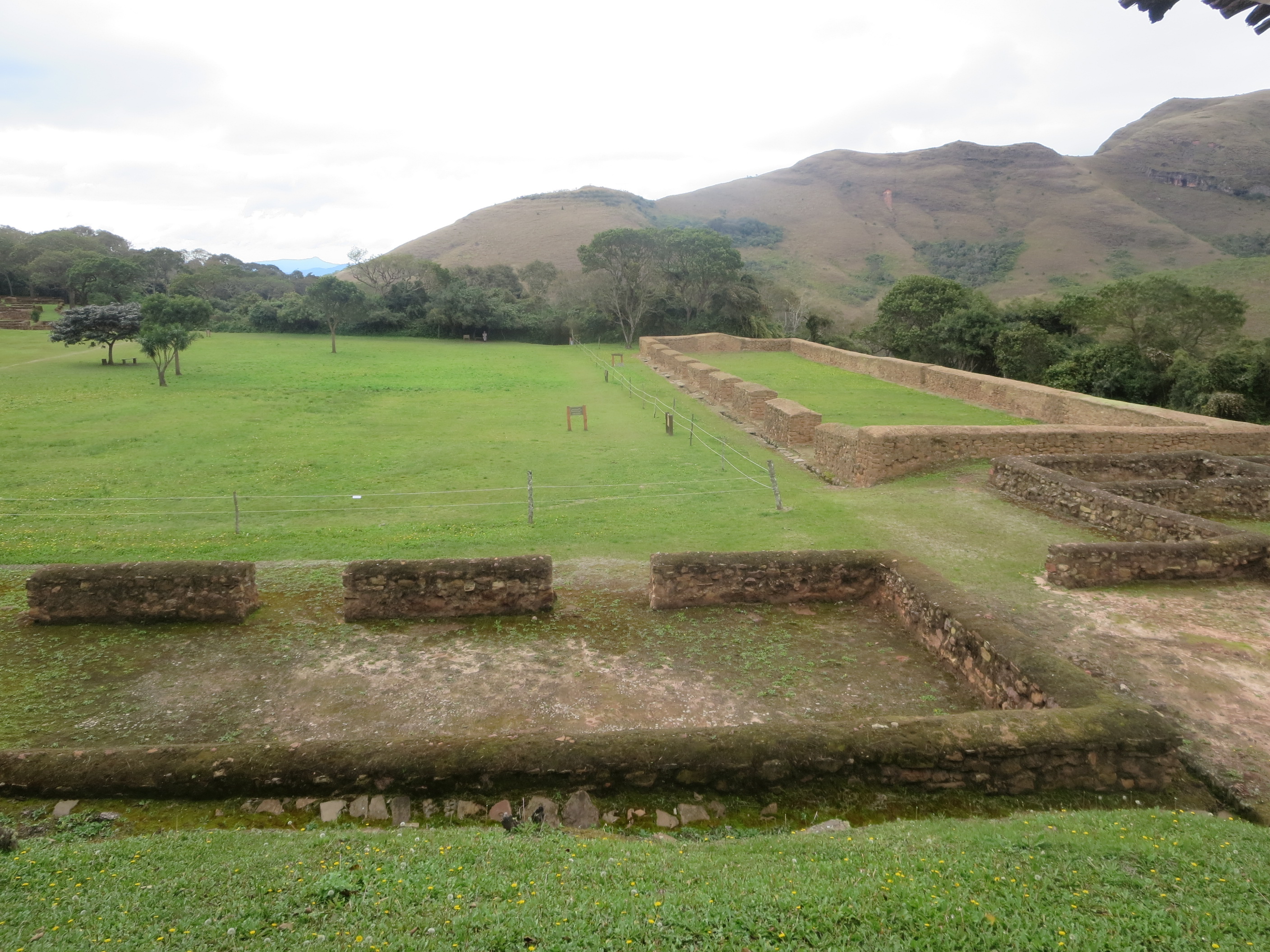
The Guarani´ from the east also traveled, visited, and rested here during around the same time as Inka construction. However, they did not build anything permanent on the site.
When the Spaniards arrived during the conquests in the mid-1500’s, they built a fortress and then houses on top and around the sides of the Inka buildings on the sculpted rock. This site was used until the the modern town area, which is lower and more favorable for agriculture, was developed.
Down in the town, the museum of ‘El Fuerte’ has artifacts, maps, and historical information about all of the cultures who populated this area through time.
Admission to the museum and site is currently 40 Bs for Bolivianos and 80 Bs for travelers not from Bolivia. Travel between the site and town is provided by wagon taxis that charge by the vehicle, so go with a small group or wait for others to arrive.
This June weekend, my friend and I did wait out in the cool, cloudy, windy plaza, and eventually other tourists did join us in the taxi.
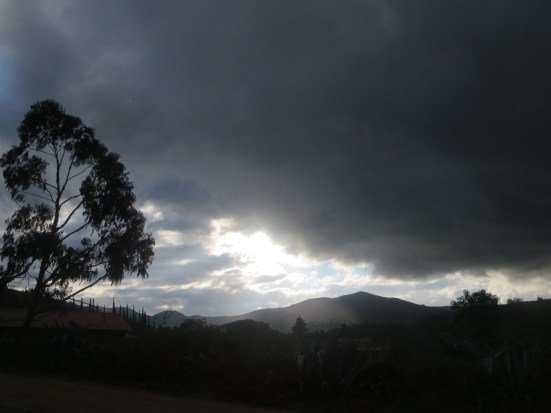
Between the shades of dark clouds and pockets of filtered sun rays, the lower Yungas and the higher grasslands, we are in a hidden place that feels between worlds. Come November, there will be a lot more going on here.
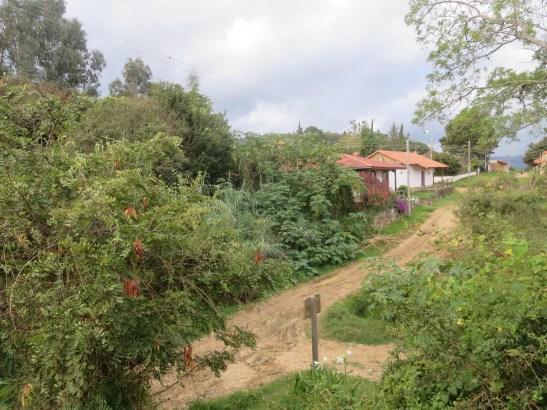
I stayed in the hostel Rosario, basic and close to the plaza, for 30 Bs for the night. There is a beautiful garden in the courtyard, and a restaurant at the entrance.

Local and international food is available in town around the plaza, with a full price range. There are a few bars too, surely more open in the warmer season.
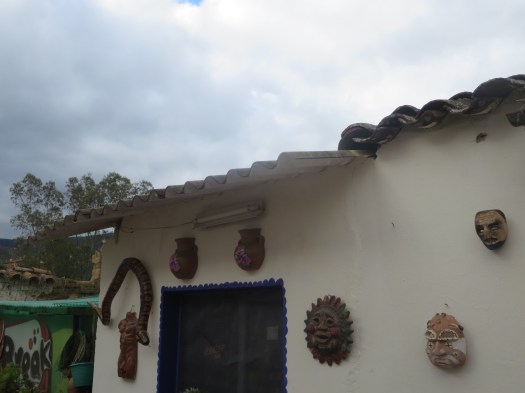

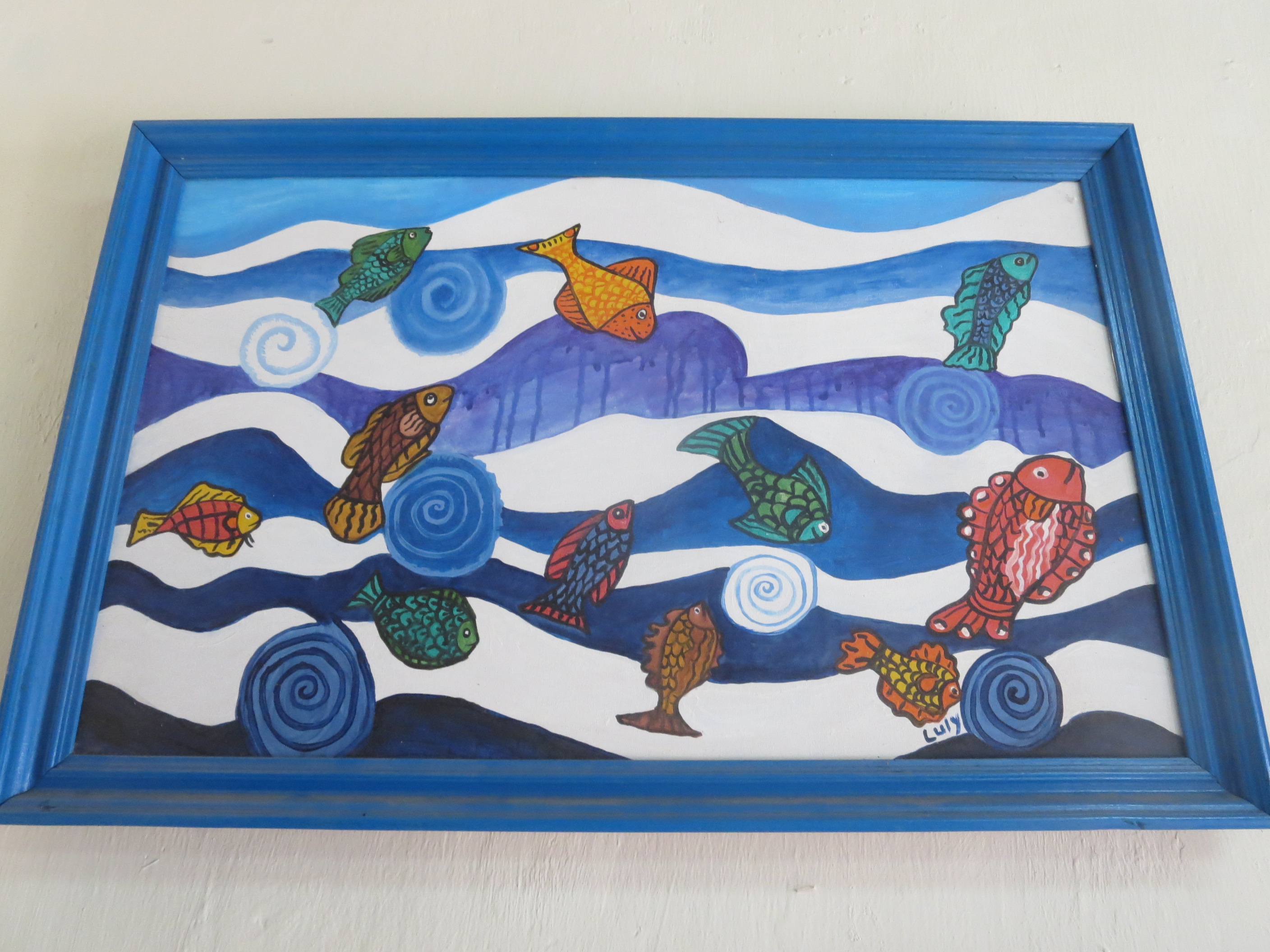
Please visit Luly’s cultural center if you are in town. It is an example of the charm of Samaipata, and her colorful art hangs on the walls inside and on the patio looking out onto the hills.
“Centro Cultural Luly” is on Calle Bolivar, Samaipata.
For art classes contact her: +591 72624784
Here is her facebook page:
https://www.facebook.com/pages/Centro-Cultural-Luly-Gutierrez/1387746708187951
–Arianna

 arianna's creative travels