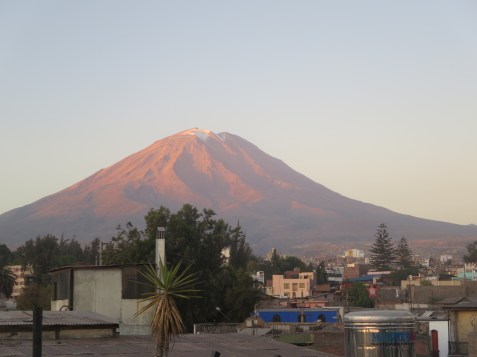
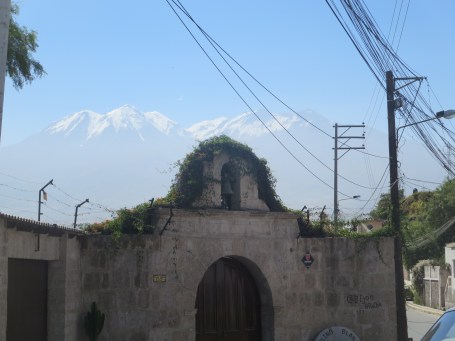
Arequipa is a beautiful city, from the volcanoes sitting to the east above it, to the iconic sillar volcanic rock churches, monasteries, and other buildings in the centro. Most of the grey-white sillar material came from Chachani, the craggy, more northern volcano. Even the hostels are sillar with arches, giving a gothic, sonorous feel to the cool nights.
El Misti is the pointed volcano directly east of Plaza de Armas and one of the city’s symbols. Watching the sun rise and set, and the changing colors on Misti and Chachani and the sillar walls below are an everyday joy from all angles (angels?).
The name ‘Arequipa’ in Quechua means ‘yes, stay here’ (‘ari’ means yes in Quechua) and it is the second largest city in Peru after Lima. El centro and Yanahuara to its north have the sillar colonial architecture; most of the rest of the city is modern. The tourist trail stays along the colonial areas, for the most part, and free walking tours can be found daily in the Plaza. I chose my own day-walks and night-walks. At night, along the Bolognesi bridge, you can see the rushing Rio Chili below the balconies of shaking stone and metal with churches lit up all around.
In the hot days, chilling by the Rio Chili is a nice idea. However there are hardly any public river access places close to el centro, and the river is already polluted at this point. Upriver, under the Chilina bridge (by the barrio of “Chilina”) there is a ‘nice place for wading’ but it is currently closed for restoration. Instead, I found river access with big rocks nearby at the industrial plant, a contrast to the beauty above.
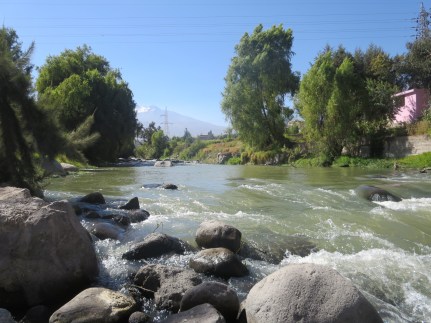
There is also a long walking path and green space on the north side of the river from el centro.
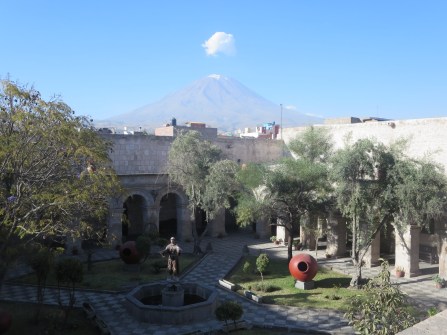
Of the colonial religious buildings, the Monasterio de Santa Catalina is the most extravagant, and the tourists I talked with all loved it and stayed inside for hours. Admission is S/40, I believe, so I skipped this and visited the San Francisco church and museum for S/5. The Franciscans’ place has a sanctuary dating from 1552, and rooms for tour with furnishings and paintings from the friars who lived and worked there. There are also unique views of the volcanoes from the upper balcony.
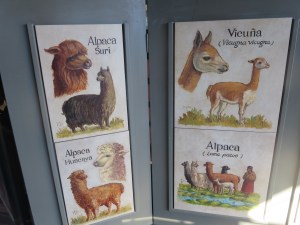
If you like llamas and alpacas, as I do, there is a store, Incalpaca, on the north side of town, with a colony of camelids and information about the history of each breed. A tour guide is available and the store and colony can be reached by city bus or on the tour buses from the Plaza. When I visited, it was late afternoon and I got to spend time with the llama, alpacas, guanaco, and vicuñ a with no other humans around.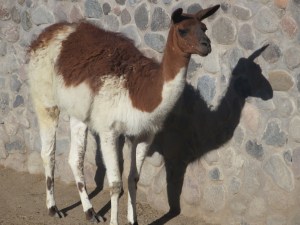
Hostels:
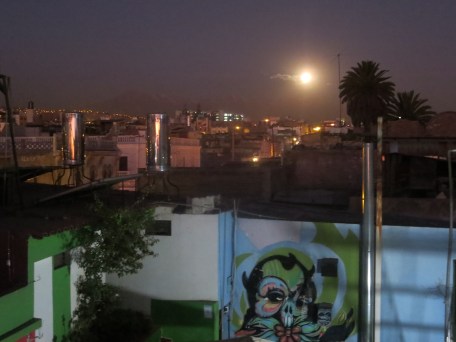
I stayed at the Bothy Hostel all nights except one and have a great impression about this place. There is a 4th floor rooftop lounge area with perfect views of the volcanoes: sunrise, sunset, midday warmth. Coffee, tea, and basic breakfast are included; the wireless internet is good, showers can be hot, and beds are comfortable. It’s two blocks from the river and three from the Plaza. There is a bar with happy hour specials. The community of international travelers and volunteers is awesome, and the workers were very helpful to me after I lost my wallet.
Food:
Papa Rellena, basic and cheap. S/1 outside the mercado central. How do they get the meat, eggs, and other stuffing inside the potato?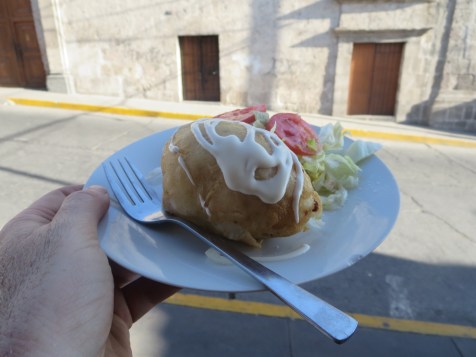
Rocoto Relleno – a large, slightly picante stuffed pepper. Same question….
The Mercado Central is on the south side of el centro, several blocks from the Plaza. Full menu del dia meals, fresh juices, pie, empanadas, produce, and more can be found here…ask for directions at the Plaza or hostel.
Music:
Traditional Arequipeña music carries more Spanish influence than other areas of Peru, and includes samba in 6/8 (there is some debate about if this is actually samba) and pampeña (the folk style known as huayno in the high Andes). While visiting, I met and played along with the folk fusion guitarist Victor Hugo Neves on a few of his original pieces in these styles.
Awesome, cheap day trip:
Yura mineral baths, about 1 hour north of the city off the carretera to Colca Canyon and Puno.
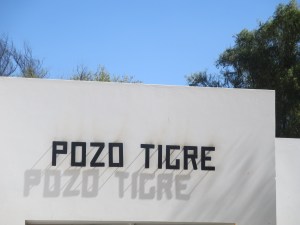
It’s a historic hot spring pueblo, and there are two modern indoor bath buildings. The
“pozo tigre” is closer, hotter, and for adults…S/5 admission. The lower one is all-ages…S/4.
Both are open daily 6 am – 3 pm. Yura can be reached from Arequipa by combi van, once an hour from Puente (bridge) Grau and about S/1 each way.. The combi says “Yura” but ask for help if needed, it can be tricky.
Bothy Hostel is located at Puente Grau 306
and can be contacted online via www.bothyhostel.com or on TripAdvisor or HostelWorld.

 arianna's creative travels