TRUJILLO AREA, PERU
June 2015
Trujillo is a mid-size city on the Panamerican Norte on the north coast of Peru. The climate is similar to Lima and the central coast, but a little warmer. During June, the season changes from sunny to foggy and gray, which happened over the days I was there.
Yellow cathedrals dot the Plaza de Armas and centro, making easy landmarks for walking around town.
The Mercado Central is located on Calle Gamarra near the Pizarro pedestrian street. Fresh fruits and juices are available here, as well as basic menu del dia for around S/6.00. The local cuisine specialty is pato (duck), which costs a little more.
I stayed for 3 nights at the hostal Conde de Arse (S/20. for dorm with bath, includes wi-fi). This quiet hostal is run by a kind man, Cesar, and his family. In the mornings I would have coffee in the courtyard and chat with Cesar. During the time I was there, I had a computer problem, and he took me to his friend’s shop on Calle Espan’a (at Calle Gamarra) and it was repaired at a discounted rate.
Conde de Arse is located at Cal. Independendia near Cal. Gamarra in centro of Trujillo.
The Archaological Sites
There are two major pre-Inka cultures that built cities around this part of the north coast, the Moche river valley: The Moche (oldest..dates?) and the Chimu (more recent, conquered by the Inka in ….date??)
Tours from central Trujillo can be done cheaply to either site – as low as S/15 per site or S/40 per day. Not sure if the price varies depending on season.
MOCHE
The Moche city was located to the south of modern Trujillo on the river floodplain. The huacas (pyramids) remain and are currently being excavated and preserved. Huaca de la Luna is the Moche ceremonial center, grand and tall over the rocks and sand, and availale for tours.
I was given a sola tour of the Huaca de la Luna because it was early morning, cool, and cloudy, and I had been waiting after the combi dropped me off outside the site. As I looked up Cerro Blanco on arrival, I watched the active excavation project. This was once a big city and now it’s covered in sand. I asked if I could help excavate but hours later at an office in Trujillo the ministry of culture turned down my offer.
By mid-day it was raining and windy.
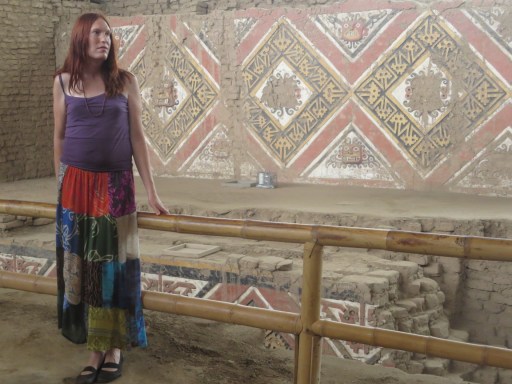
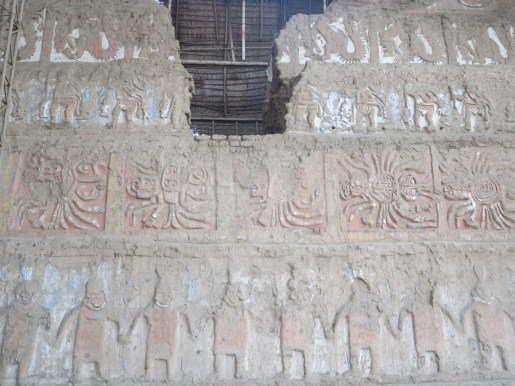
The red-faced icons of the Mountain God still stand on the temple’s ancient walls, and also on tourist trinkets handmade and sold so you can wear its face around your neck or hang on the wall. This same face accepted youths 15-18 years for sacrifice in the old Moche days — those who lost a battle fought in the temple arena.
Overlooking the old Moche city, this pyramid of painted stories, animal spirits, warriors, and altars in red, blue, black, and white bright chills, and it wasn’t just the cool air. There were often sounds and knocks inside the temple, and it wasn’t just the wind. The skeletons in the grey rocks most likely had much to tell.
Huaca del Sol, the admin and military center, is closed to visitors due to reconstruction. More is being excavated every day.

CHAN CHAN
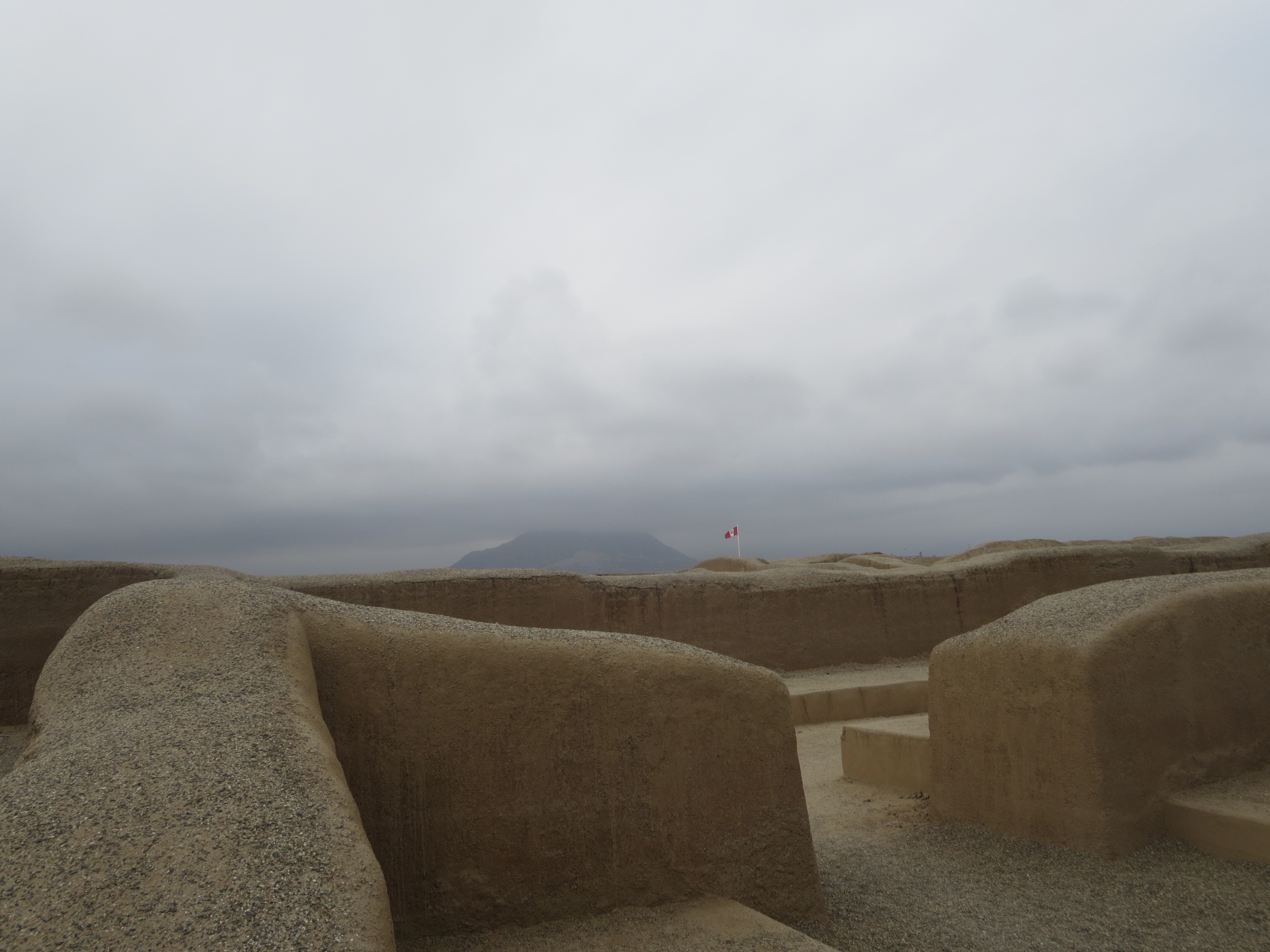
Chan Chan, the Chimu cultural capital, was once the largest city in the Americas. It’s located to the north of modern Trujillo. The adobe walls and structures that remain are so extensive, it’s easy to get lost and forget where you are in relation to the world outside. On this day, the thick coastal clouds rolled in as our tour group approached, covering us and masking our direction.
Inside the city, latticework icons of fish and birds mark the hollow halls, while a condor flew over us in his majesty, after a break from his corpse meal on top of one ruined wall. The giant pleasure pool and tomb areas lie closest to the ocean, though it’s hard to see or hear how close you are due to the endless tan palace walls.
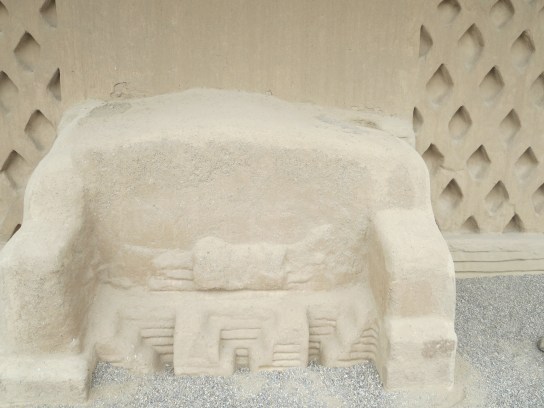
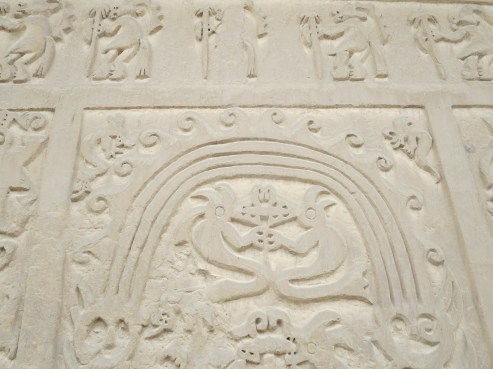
Inland and separate from the main Chan Chan is the Huaca Arco Iris, a Chimu temple with rainbow dragon icons. This is included as part of the Chan Chan tour and is small but awesome to visit too.
NEARBY CITIES: HUANCHACO and MOCHE PUEBLO
Huanchaco, the local beach community, is small but present and famous for its totoro reed boats, used since pre-Inka times (Chimu at least). On my visit, as part of the Chan Chan day tour, it was cool and gloomy, with a nice mix of pescadero and laid back tourist (trap?) There are backpacker hostels filled with young world travelers. But is it enough? I didn’t visit again, it feels like a seasonal place. Maybe this is a new alternative to Mancora, the bigger, livelier beach town to the north.
On my last day on the north coast, I visited the pueblo of Moche: a modern day echo of what once was, and also a tight farming community to the south of Trujillo near the Huacas.
Upon arrival, I slinked past strange looks from locals down streets till they became dirt and then farm trails, past chacras, gardens, rows of corn stalks, till I could see the ocean. Looking back at the pueblo and mountains beyond, this felt like the time for a song. A local woman appeared and told me to be careful or someone may rob me. Then I returned to the plaza for lunch – Raya (sea creature) with yuca (root vegetable), delicious, cheap, and local.
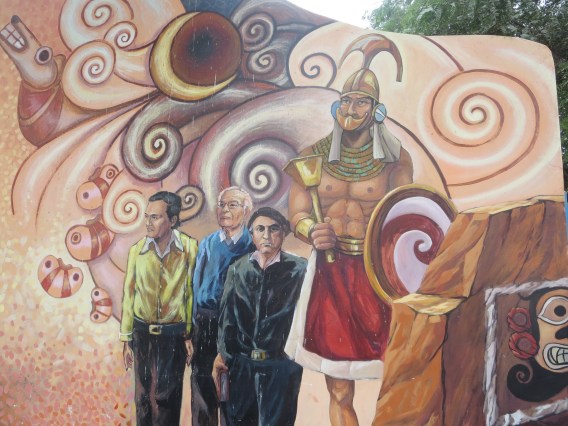
After lunch, I was sitting in the plaza when a funeral procession poured out of the church. It felt right to follow, for several blocks, in meditation, looking back on the murals of history on plaza walls: Moche, Inka, Catholic colonization….before the combi returning to Trujillo passed me by with open door.

 arianna's creative travels
Beautiful pics of such history, the reading make sya want to fly there wow u saw a condor!
LikeLike